Category

Murals

How to Paint a Mural: A Beginner’s Guide

how to paint a mural for beginners

Learning how to paint a mural can feel overwhelming at first, especially if you are working on a large wall, using new materials or trying to scale up a design from paper to a full mural.

The good news is that mural painting becomes much easier when you break the process into clear steps.

Whether you are painting a small feature wall at home, a community mural, a school project or your first outdoor wall, the same basic process applies: plan the design, prepare the surface, scale the artwork, paint in stages and protect the finished mural.

This beginner’s guide explains how to paint a mural step by step, including what materials you may need, how to transfer your design onto a wall and what to think about before you start painting.

At Blackbook Ink, we have painted hundreds of murals across Australia for schools, councils, businesses, homes and public spaces. This guide is designed to help beginners understand the basics before starting their own mural project.
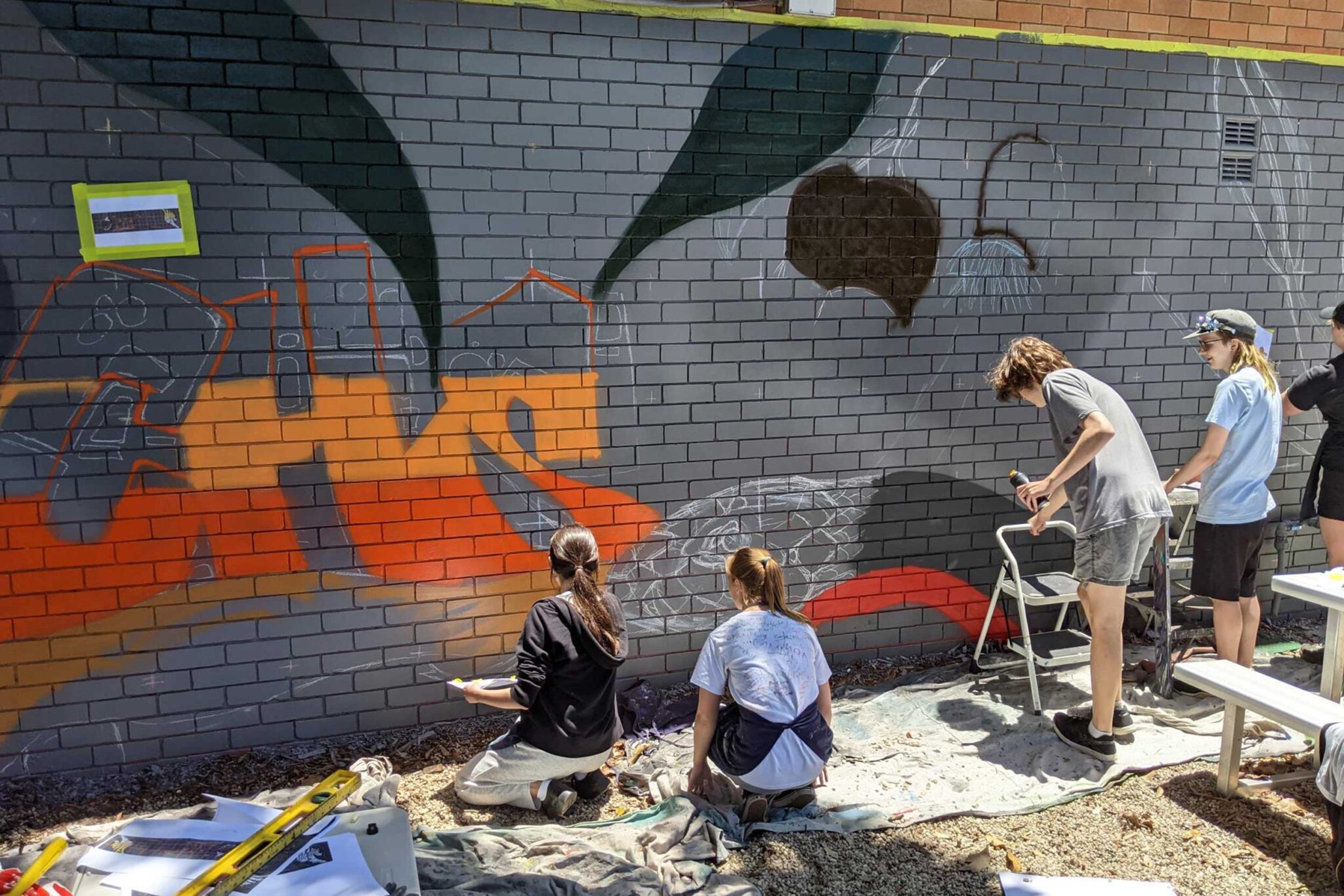
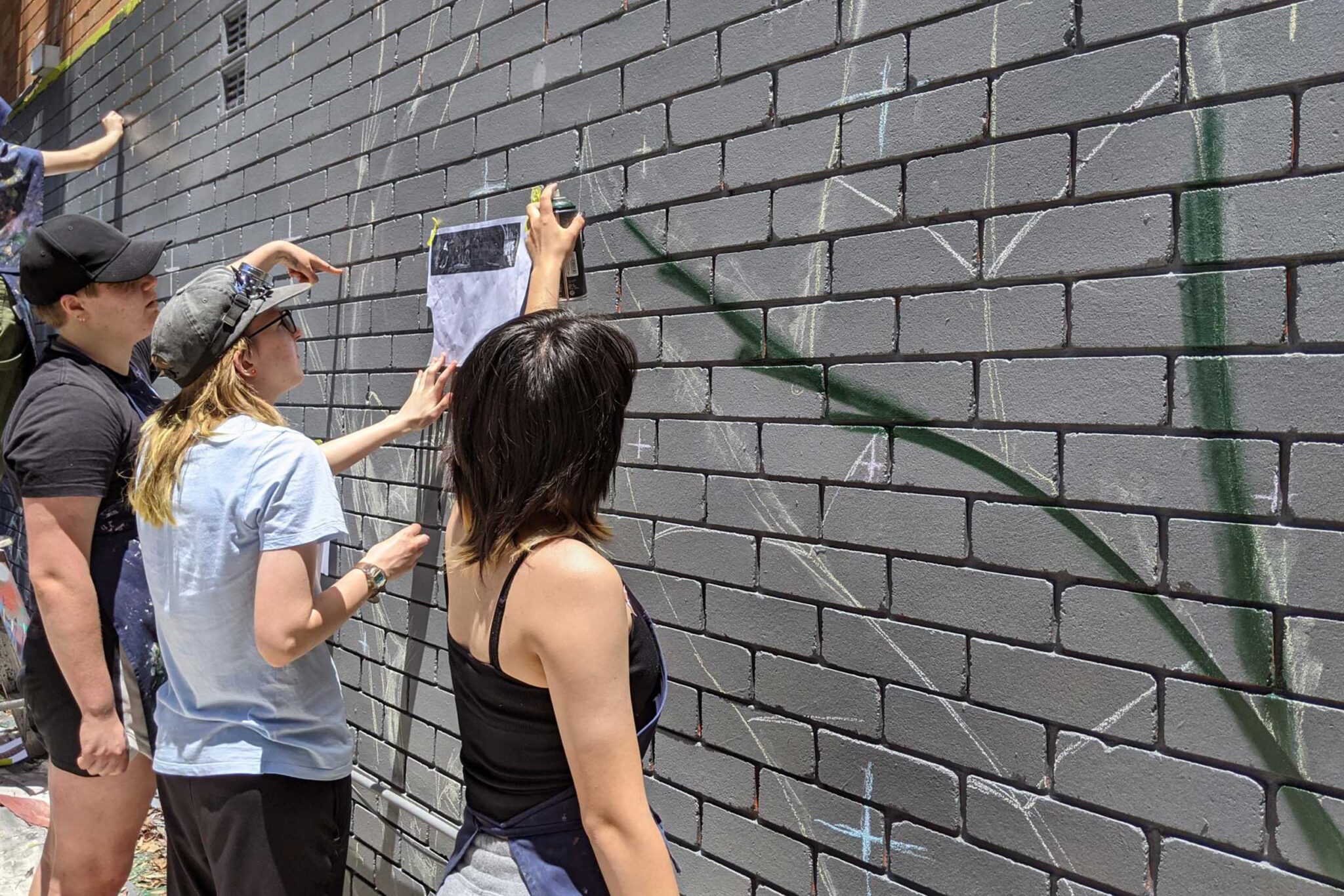
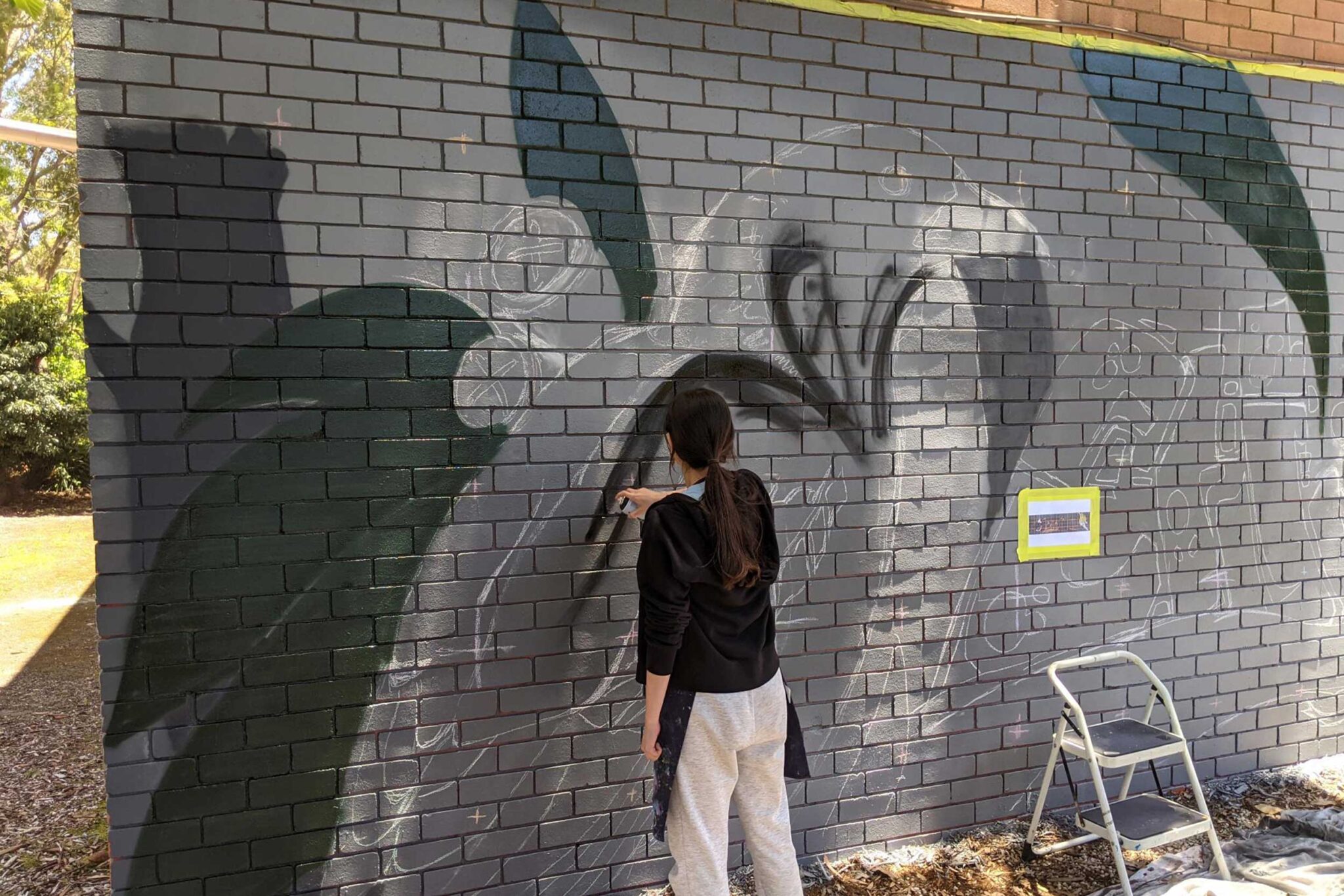
Students been taught how to paint a mural as part of a school workshop

What Is a Mural?

A mural is an artwork painted or applied directly onto a wall, ceiling or large surface.

Murals can be created indoors or outdoors and can range from simple shapes and patterns through to detailed illustrations, realistic portraits, landscapes, graffiti art or large-scale public artworks.

Unlike a canvas painting, a mural needs to work with the wall itself. The size, surface, location, lighting and viewing distance all affect how the artwork should be designed and painted.

This is why planning is one of the most important parts of mural painting.

What Do You Need to Paint a Mural?

Before you start painting, it helps to organise your materials.

What you need will depend on the size of the mural, the surface and whether it is indoors or outdoors, but most beginner mural projects will need a version of the following:

  • Painter’s tape
  • Drop sheets
  • Pencils, chalk or paint markers
  • A tape measure
  • A level or ruler
  • Primer or undercoat
  • Exterior or interior wall paint
  • Acrylic paint or spray paint
  • Paint brushes
  • Rollers and trays
  • Water buckets or cleaning materials
  • Rags or paper towel
  • Ladder or step platform
  • Clear protective coating if needed

For larger murals, you may also need scaffolding, an elevated work platform, spray equipment, respirators, safety barriers or traffic control depending on the location.

For beginner projects, start small. A simple feature wall, bedroom mural or low-height garden wall is much easier to manage than a large outdoor commercial wall.

Step 1: Choose the Right Wall

The first step in learning how to paint a mural is choosing the right wall.

A good mural wall should be stable, clean, dry and suitable for painting. Avoid surfaces with major cracking, peeling paint, water damage, mould or loose render unless they can be repaired first.

Before starting, check:

  • Is the wall indoor or outdoor?
  • Is the surface smooth, brick, concrete, render, timber or metal?
  • Is there existing paint on the wall?
  • Is the wall exposed to direct sunlight or rain?
  • Can you safely reach the full area?
  • Do you have permission to paint it?

The surface will affect what preparation, primer and paint system you need.

Step 2: Plan Your Mural Design

A successful mural starts with a clear design.

Before painting directly on the wall, sketch your idea on paper or create a digital mockup. This helps you work out the composition, colours, proportions and main elements before committing paint to the surface.

For beginners, simple designs are usually best. Large shapes, bold colours and clear outlines are easier to paint than highly detailed realism.

When planning your mural, think about:

  • What is the purpose of the mural?
  • Who will see it?
  • How far away will people stand when viewing it?
  • What colours suit the space?
  • How detailed does it need to be?
  • Will it include text, logos or characters?
  • Does the design suit the size and shape of the wall?

A design that looks good on paper may need to be simplified when scaled up to a large wall.

Step 3: Prepare the Wall

Wall preparation is one of the most important parts of mural painting.

Even the best artwork will struggle to last if the surface is dirty, dusty, damp or flaking. Preparation helps the paint bond properly and creates a cleaner surface to work on.

Basic wall preparation may include:

  • Cleaning dust, dirt or cobwebs from the wall
  • Removing loose or peeling paint
  • Filling small holes or cracks
  • Sanding rough edges
  • Washing greasy or dirty areas
  • Allowing the wall to dry completely
  • Applying primer or undercoat if needed

Outdoor walls often need more preparation than indoor walls because they are exposed to weather, moisture and dirt.

If you are painting a wall with mould, damp problems or major structural issues, fix those problems before starting the mural.

Step 4: Prime or Base Coat the Wall

A primer or base coat helps create an even surface and can make your mural colours look cleaner.

If the wall is bare brick, concrete, render, timber or an uneven colour, a primer or base coat is usually recommended. For outdoor murals, use products suitable for exterior surfaces.

A base coat can also help cover old marks, patchy paint or strong colours underneath.

For most murals, a light neutral base colour works well because it gives you a clean surface to sketch and paint on. White, off-white or light grey are common options, depending on the final design.

Allow the base coat to dry properly before transferring your design.

Step 5: Transfer Your Design Onto the Wall

Once the wall is prepared, the next step is getting your design onto the surface.

There are several ways to do this:

Grid Method

The grid method is a simple option for beginners.

Draw a grid over your design, then draw a matching larger grid on the wall. Copy each square one at a time. This helps keep proportions accurate when scaling up.

Projector Method

A projector can be used to project your design onto the wall so you can trace the outlines.

This is useful for indoor murals or night-time work, but it may not be practical in bright outdoor conditions.

VR Headset Method

Another option is to use a VR headset, such as a Meta Quest 3, with mural layout apps like Contour or Stencil VR.

This method can help you view your design over the wall and trace the layout at scale. Instead of relying only on a projector, a VR headset can allow you to see your artwork positioned in the space while you mark out the main shapes, proportions and outlines.

For mural painting, this can be useful when:

You are working in a space where a projector is hard to position
The wall is too large for a standard projector setup
You want to check scale and placement before painting
You need to transfer outlines, lettering or composition guides
You want a more flexible way to place artwork onto the wall

VR can be a helpful tool, but it is still only a guide. You still need to check measurements, step back from the wall regularly and make adjustments by eye. Lighting, headset alignment and wall shape can affect how accurate the overlay appears.

For beginners, it is best to use VR to map out the main structure first, then refine the sketch manually before painting.

Freehand Sketching

If you are confident with drawing, you can sketch directly onto the wall using chalk, pencil or diluted paint.

This gives more freedom but requires stronger drawing skills.

Stencils or Tape

For simple shapes, patterns, lettering or geometric murals, stencils and painter’s tape can help create clean edges.

Choose the transfer method that suits your confidence level and the type of mural you are painting.

Step 6: Paint the Background First

When painting a mural, it usually helps to work from the background forward.

Start with large background areas, then gradually build up midground shapes, main subjects, details and final highlights.

This process helps you avoid painting small details too early and then accidentally covering them later.

For example, if you are painting a landscape mural, you might paint:

  • Sky or background colours
  • Distant shapes
  • Main objects
  • Shadows
  • Highlights
  • Fine details
  • Outlines or finishing touches

Working in layers keeps the process more organised and helps the mural develop naturally.

Step 7: Build Up Colours in Layers

Mural painting usually looks better when colour is built up in layers rather than trying to finish everything in one coat.

Some colours may need two or more coats to look solid, especially bright colours, yellows, reds or paints going over a darker base.

Let each layer dry before adding the next. This helps avoid muddy colours, streaks or uneven coverage.

For beginners, it is often easier to block in the main shapes first, then refine the mural gradually.

Do not worry if the mural looks rough during the early stages. Most murals go through an unfinished-looking stage before the details bring everything together.

Step 8: Add Details, Shadows and Highlights

Once the main colours and shapes are in place, you can begin adding details.

This might include outlines, textures, shadows, highlights, patterns, lettering or small features that make the mural feel finished.

Details should support the mural rather than overcrowd it. On large walls, too much small detail can get lost from a distance.

A good rule for beginners is to step back regularly and look at the mural from the normal viewing distance. This helps you see whether the artwork is balanced and readable.

Step 9: Let the Mural Dry Properly

After the mural is finished, allow it to dry properly before touching, cleaning or sealing it.

Drying time will depend on the paint type, weather, wall surface and how thickly the paint has been applied.

Outdoor murals may take longer to fully cure, especially in cooler or humid conditions.

Avoid painting in rain, extreme heat, heavy wind or on damp surfaces. Poor weather conditions can affect how the paint bonds and dries.

Step 10: Seal or Protect the Mural

Not every mural needs a clear coating, but outdoor murals, high-touch areas and public-facing walls often benefit from extra protection.

A protective coating can help defend the mural against UV exposure, weathering, dirt and graffiti.

For outdoor commercial or public murals, anti-graffiti coatings may be worth considering. These coatings can make future cleaning easier if the wall is tagged or marked.

Before applying any clear coat, make sure it is compatible with the paint you used. Some coatings can change the finish or colour of the artwork if applied incorrectly.

Common Beginner Mural Painting Mistakes

Beginner mural painters often run into the same problems.

Here are some common mistakes to avoid:

  • Starting without a clear design
  • Painting on a dirty or damaged wall
  • Skipping primer or base coat when needed
  • Using the wrong paint for the surface
  • Adding too much detail too early
  • Not stepping back to check the overall mural
  • Painting in poor weather conditions
  • Forgetting about access and safety
  • Not allowing enough drying time
  • Using a coating that is not compatible with the paint

Most of these problems can be avoided with proper planning and surface preparation.

Indoor vs Outdoor Murals

Indoor and outdoor murals have different requirements.

Indoor murals usually have more controlled conditions. You do not have to worry as much about rain, UV exposure or weather damage, but you still need to think about ventilation, floor protection and the type of wall paint being used.

Outdoor murals need to handle sunlight, moisture, temperature changes, dirt and public exposure. They usually require more careful surface preparation, exterior-grade materials and sometimes protective coatings.

If you are painting your first mural, an indoor wall is often easier to manage.

How Long Does It Take to Paint a Mural?

The time it takes to paint a mural depends on the size, detail level, surface condition and number of people painting.

A small simple mural might take a day or two. A larger detailed mural could take several days or weeks.

You also need to allow time for design, wall preparation, base coating, drying time and final protection.

For professional mural projects, the artwork itself is only one part of the process. Planning, concept development, site access, materials, safety and weather can all affect the timeline.

What Paint Should You Use for a Mural?

The best paint for a mural depends on the surface and location.

For indoor murals, quality acrylic paints, interior wall paints or low-odour water-based paints can work well.

For outdoor murals, choose exterior-grade paints designed to handle weather and UV exposure. Spray paint can also be used for murals, especially for graffiti art, street art and large-scale colour work.

Do not use cheap craft paint for large outdoor murals. It may fade, peel or break down faster than proper mural-grade materials.

When in doubt, choose paint designed for the surface you are painting.

Do You Need Permission to Paint a Mural?

Yes, in most cases you need permission before painting a mural on any wall you do not own.

For private walls, get permission from the property owner.

For public spaces, schools, businesses, strata buildings, council property or commercial sites, you may need formal approval before painting.

You may also need to consider:

Building ownership
Council rules
Strata approval
Public liability insurance
Working at heights
Copyright for reference images
Safety requirements
Access equipment
Neighbouring properties

Never paint a mural on public or private property without permission.

It is also worth understanding copyright rules for public art and reference images before using photos, logos or characters you did not create yourself.

When Should You Hire a Professional Mural Artist?

Painting your own mural can be a great creative project, especially for small indoor walls or simple designs.

But for larger, detailed, public-facing or commercial murals, hiring a professional mural artist is usually the better option.

A professional mural artist can help with design, scale, surface preparation, materials, safety, access and long-term durability.

This is especially important for:

Business murals
School murals
Public art murals
Council projects
Large exterior walls
Brand activations
Detailed realism
Murals requiring lifts or scaffolding
Walls needing anti-graffiti coatings

If the mural needs to represent a business, school or public space professionally, it is worth getting the artwork planned and painted properly.

Final Thoughts

Learning how to paint a mural is all about planning, preparation and patience.

Start with a clear design, choose the right wall, prepare the surface properly and build the artwork in stages. A mural does not need to be highly detailed to be effective. Simple shapes, strong colours and a well-planned design can still create a powerful result.

For beginners, start small and build confidence before attempting large or complex walls.

If you are planning a mural for a school, business, home or public space and want a professional result, Blackbook Ink can help with concept design, mural painting, graffiti art, street art and large-scale wall artwork across Sydney and Australia.

Get a Quote for a Mural

FAQs About Painting a Mural

Start by choosing a suitable wall, creating a simple design, preparing the surface, applying a base coat, transferring your design and painting the mural in layers. Beginners should start with large shapes and simple colours before adding smaller details.

For indoor murals, acrylic paint or quality interior wall paint can work well. For outdoor murals, use exterior-grade paint or professional spray paint designed for outdoor conditions. The best paint depends on the surface, location and finish you want.

In many cases, yes. Primer helps paint bond to the surface and creates a more even base. Bare brick, concrete, render, timber or patchy walls usually benefit from primer or a base coat before mural painting.

Yes. You can use the grid method, doodle grid, VR Headset, freehand sketching, stencils, painter’s tape or chalk outlines to transfer your design onto the wall without a projector.

A small simple mural may take a day or two, while larger or more detailed murals can take several days or longer. Design time, surface preparation, drying time, access and weather can all affect the timeline.

Outdoor murals, public-facing walls and high-touch areas often benefit from a protective clear coat or anti-graffiti coating. Indoor murals may not need sealing unless they are in a high-use area.
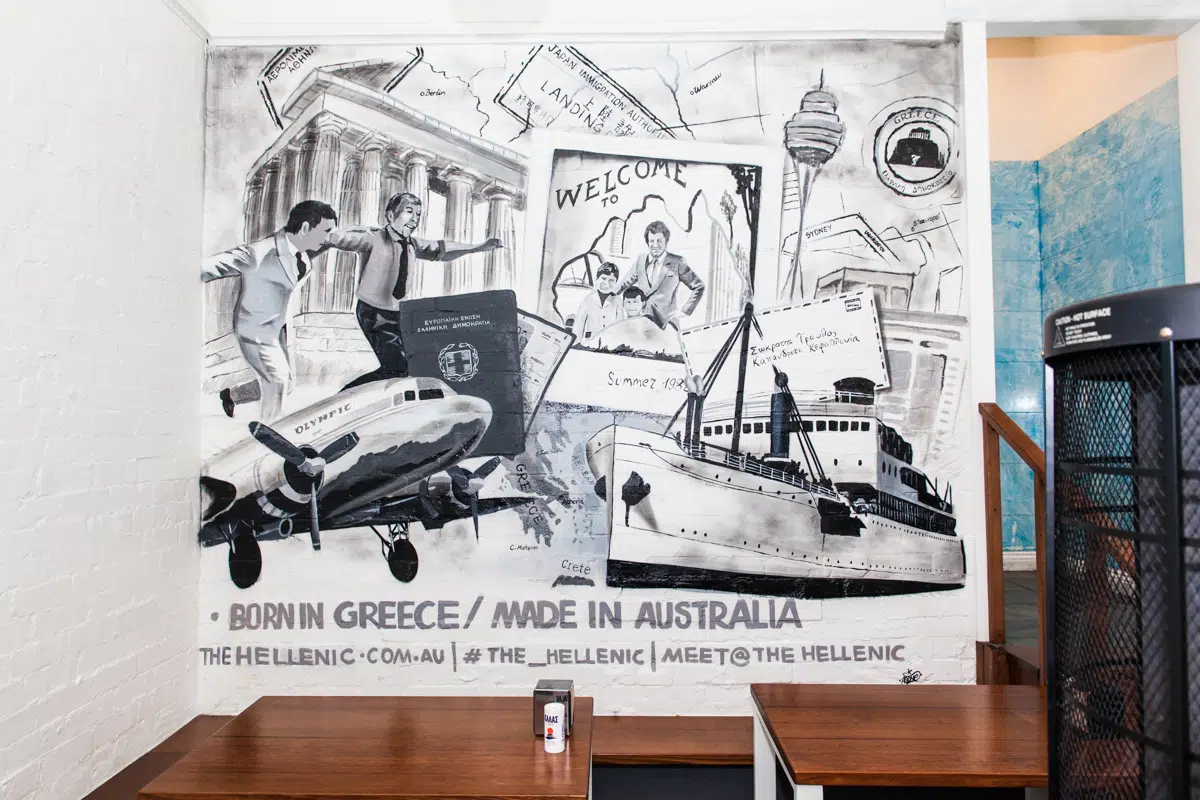
Why Businesses Are Hiring Muralists Instead of Traditional Signage

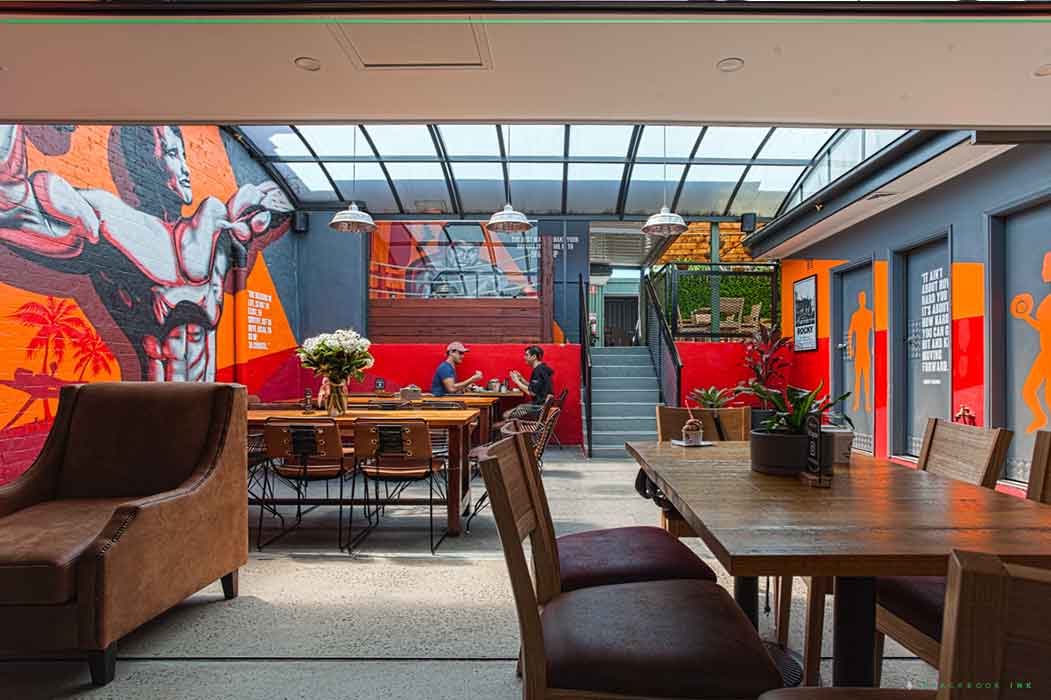
Muralists for businesses creating a custom commercial wall mural

For years, business signage has been one of the most common ways to display a logo, direct customers or make a shopfront feel more professional.

But more businesses are now looking beyond standard signs and choosing custom murals instead. This is where muralists for businesses can offer a more tailored approach, creating artwork that supports both the space and the brand.

From restaurants and gyms to offices, retail stores, breweries, cafés and commercial spaces, murals are being used as a more creative way to build brand identity, attract attention and turn blank walls into memorable parts of the customer experience.

More businesses are now looking for muralists for businesses who can create custom artwork that does more than decorate a wall. The right mural can help shape the customer experience, strengthen brand identity and make a commercial space more memorable.

Traditional signage still has its place. But when a business wants something more unique, site-specific and engaging, hiring a professional muralist can offer much more than a standard sign on a wall.

At Blackbook Ink, we work with businesses across Australia to create custom murals, graffiti-style artwork and branded wall art that helps spaces feel more connected, recognisable and visually memorable.

Custom business mural painted by Blackbook Ink for a commercial space

Murals Create a Stronger First Impression

First impressions matter.

Before a customer speaks to your staff, looks at a menu or browses your products, they are already forming an opinion based on the space around them.

Traditional signage can tell people your business name. A mural can help them feel what your business is about.

A well-designed mural can create atmosphere, communicate personality and make a space feel considered from the moment someone walks in. This is why more businesses are using murals in restaurants, cafés, office reception areas, retail stores, gyms, fitness centres, hospitality venues, shopping centres, workplaces, showrooms and event spaces.

Instead of simply placing a logo on a wall, a mural can turn that wall into a feature that supports the wider brand experience.

For businesses that rely on presentation, atmosphere and customer connection, this can make a big difference.

Murals Feel More Custom Than Standard Signage

One of the biggest reasons businesses are hiring muralists is because murals do not feel generic.

Traditional signage often follows a similar formula: logo, brand colours, text and maybe a graphic element. It can be effective, but it may not always create a strong emotional response.

A custom mural can be designed around the business, the building, the location and the people who use the space. Unlike general decorators or signwriters, muralists for businesses think about how the artwork will be seen, photographed and experienced by customers.

For example, a mural for a hospitality venue might include food references, cultural themes or local landmarks. A mural for a gym might focus on energy, movement and motivation. A mural for a corporate office might bring brand values, staff culture or company history into the workspace.

This is where a professional muralist offers more than just painting ability. The artwork needs to be designed with purpose, not just decoration.

Murals Help Businesses Stand Out

Many businesses operate in competitive areas where customers have plenty of choice.

A standard sign may help people identify your business, but a mural can help people remember it.

This is especially important for businesses in high-foot-traffic locations such as main streets, shopping centres, laneways, hospitality strips and entertainment precincts.

A strong mural can make a building more noticeable from the street. It can also give people a reason to stop, look, take a photo or share the space online.

That extra attention can be valuable for new business launches, shopfront upgrades, venue refreshes, brand activations, hospitality fit-outs, retail campaigns and commercial developments.

When a mural is designed properly, it becomes part of the business identity rather than just another visual element.

A sign can tell people where your business is.
A mural can help them remember it.

Murals Can Turn Blank Walls Into Marketing Assets

A blank wall is often wasted space.

For many businesses, walls are large, visible surfaces that could be doing more. Professional muralists for businesses can help turn these blank areas into branded features that continue working long after the paint has dried. Instead of leaving them plain or covering them with basic signage, murals can turn those spaces into long-term marketing assets.

A mural can support a business by making the space more recognisable, creating photo opportunities, reinforcing the brand personality, improving customer experience, adding visual value to the fit-out, making the business easier to remember and supporting social media content.

This is why murals work particularly well for hospitality venues, gyms, retail spaces and offices where customers, staff or visitors regularly interact with the space.

A mural does not need to be overly complex to be effective. Sometimes a simple, bold and well-placed artwork can have more impact than a wall full of signage.

Commercial mural used as a marketing feature wall for a business

Murals Are More Shareable Than Traditional Signs

People do not usually take photos of standard signs.

They do take photos of murals.

This is one of the biggest advantages murals have over traditional signage. A custom mural can become an organic content opportunity for customers, visitors and staff.

For cafés, restaurants, gyms and retail stores, this can help create more user-generated content. Customers may photograph the mural, tag the business or share the space with their own audience.

This does not mean every mural needs to be designed as an “Instagram wall”. But it does mean the artwork should be visually strong enough to make people notice it.

For businesses trying to create a more memorable space, this can add value beyond the wall itself.

Murals Can Still Include Logos and Brand Messaging

Choosing a mural does not mean removing brand signage altogether.

In many cases, the best result is a combination of both.

A mural can include a logo, slogan, brand colours or key messaging, but in a way that feels more integrated into the artwork. This can be more visually appealing than placing a logo on a flat wall with no surrounding context.

For example, a branded mural might include a painted logo, brand colours, illustrated products, local references, industry-related imagery, company values, staff culture themes or abstract brand patterns.

The difference is that the branding becomes part of the artwork, rather than sitting separately from the space.

This approach is especially useful for businesses that want their branding to feel more creative, personal and memorable.

Murals Improve the Customer Experience

Good business interiors are not just about function. They also shape how customers feel.

A plain wall may be practical, but it does not add much to the overall experience. A mural can help create a stronger atmosphere and make the space feel more complete.

This is particularly valuable in restaurants, cafés, bars, retail stores, gyms, salons, clinics, offices, waiting areas and showrooms.

For example, a mural in a restaurant can help set the tone before the food arrives. A mural in a gym can make the space feel more energetic. A mural in an office can make the workplace feel more connected to the company’s identity.

When customers enjoy being in a space, they are more likely to remember it, recommend it and return.

Custom mural improving the atmosphere of a business interior

Murals Can Support a Local Identity

Businesses often want their spaces to feel connected to the area they operate in.

Traditional signage usually focuses on the business itself. A mural can go further by referencing the surrounding suburb, local landmarks, history, community, natural environment or cultural identity.

This is especially useful for businesses that want to feel part of the local area rather than looking like a generic fit-out.

This is similar to the way public art is often used in placemaking to make spaces feel more distinctive and connected to community.

A site-specific mural can help communicate that the business has invested in the space and understands its surroundings.

This approach is also common in public-facing commercial spaces, shopping centres, councils and community-focused developments where placemaking is an important part of the project.

Murals Can Last for Years

A professionally painted mural can be a long-term investment.

With the right surface preparation, quality materials and protective coatings, murals can last for years in both indoor and outdoor environments.

At Blackbook Ink, we use professional mural materials and can recommend UV and anti-graffiti coatings where suitable. This helps protect the artwork from sun exposure, weathering, general wear and unwanted tagging.

This is particularly important for outdoor commercial murals, shopfronts, hospitality venues and public-facing walls.

Like signage, murals need to be planned properly. The wall condition, exposure, access, surface type and finish all affect the best approach.

When Traditional Signage Still Makes Sense

Murals are powerful, but they do not replace every type of signage.

Traditional signage is still important for clear information such as business names, wayfinding, opening hours, safety notices, directional signs, compliance signage, menu boards and building identification.

The best approach is often to use signage for clear information and murals for brand experience.

A sign can tell people where they are. A mural can help them remember the place.

That is why more businesses are using both together.

Why Hire Professional Muralists for Businesses?

Professional muralists for businesses understand that commercial artwork needs to do more than look impressive. It needs to suit the brand, work with the space, support the customer experience and hold up over time.

A successful business mural needs more than someone who can paint well.

It needs planning, design experience and an understanding of how the artwork will work in the space.

A professional muralist can help with interpreting the brief, creating a concept that suits the brand, working with existing architecture, selecting the right artwork style, planning scale and placement, managing surface preparation, installing the mural safely, using durable materials and recommending protective coatings.

This is especially important for commercial spaces where the mural needs to represent the business professionally and last over time.

At Blackbook Ink, our process includes consultation, concept development, design revisions, site planning and professional mural installation.

Final Thoughts

Businesses are hiring muralists instead of relying only on traditional signage because murals offer something more memorable.

A sign can identify a business. A mural can create atmosphere, tell a story, attract attention and turn a blank wall into part of the brand experience.

For businesses that want to stand out, improve their space and create a stronger connection with customers, a custom mural can be a powerful alternative to standard signage.

Whether it is a shopfront, office, restaurant, gym, retail store or commercial fit-out, a well-designed mural can help make the space more recognisable, engaging and memorable.

This is why muralists for businesses are becoming a stronger option for brands that want more than basic wall signage.

If you are planning a mural for your business, Blackbook Ink creates custom murals, graffiti artwork and branded wall art for commercial spaces across Australia.

FAQs About Hiring Muralists for Businesses

Businesses are hiring muralists because custom murals can make a space more memorable, improve the customer experience and support brand identity. Unlike standard signage, murals can create atmosphere, tell a story and turn a blank wall into a visual feature.

Murals and signage serve different purposes. Signage is useful for clear information such as business names, directions and opening hours. Murals are better for creating atmosphere, brand identity and a memorable customer experience. Many businesses use both together.

Yes. A business mural can include your logo, brand colours, slogans, products or other visual elements. The benefit of a mural is that these details can be worked into the artwork instead of looking like standard flat signage.

Muralists are commonly hired by cafés, restaurants, gyms, retail stores, offices, salons, breweries, shopping centres, hospitality venues and commercial developments.

Murals can help make a business more noticeable and memorable. A strong mural can improve the appearance of a space, encourage photos and make the business easier for customers to remember.

A professionally painted mural can last for years when the wall is prepared correctly and quality materials are used. Outdoor murals may also benefit from UV or anti-graffiti coatings depending on the location and exposure.

Related Articles

How Murals Increase Foot Traffic for Businesses

how murals increase foot traffic for businesses

How murals increase foot traffic is a common question for business owners looking to make their space more noticeable, memorable and engaging.

Standing out in a competitive environment is one of the biggest challenges for any business. Whether it is retail, hospitality, offices or commercial spaces, attracting attention is the first step in bringing customers through the door.

This is where murals can make a real difference.

Many businesses underestimate how much murals can increase foot traffic when they are designed and placed correctly. A mural can act as both a visual attractor and a branding tool, helping a business become more noticeable, memorable and easier to recognise.

Unlike standard signage, a mural can create curiosity, encourage people to stop and turn a blank wall into a long-term marketing asset.

At Blackbook Ink, we create custom murals for businesses across Sydney and Australia, helping commercial spaces stand out through professional mural artwork, graffiti art and site-specific wall designs.

Custom graffiti mural designed to increase foot traffic for a business

Why First Impressions Matter for Businesses

For most businesses, you only have a few seconds to capture attention.

A plain or generic exterior often blends into the background. A bold, professionally designed mural can create immediate visual impact and give people a reason to stop, look and remember the space.

A mural can help create:

  • Immediate visual impact
  • Curiosity from passersby
  • A more recognisable location
  • A reason for people to stop and look
  • A stronger connection between the space and the brand

This visual interruption is what can turn passive foot traffic into potential customers.

How Murals Increase Foot Traffic

Understanding how murals increase foot traffic comes down to how people notice, remember and interact with a space.

Murals work because they combine scale, colour, creativity and location. A well-placed mural can make a business easier to notice from a distance, more memorable after someone has walked past and more engaging once people interact with the space.

There are four main ways murals help bring attention to a business.

1. They Create Visual Landmarks

Murals turn ordinary locations into recognisable destinations.

A painted wall, shopfront or feature area can become a visual marker that helps people remember where your business is. This is especially useful for businesses located in busy streets, laneways, shopping centres, industrial areas or shared commercial spaces.

Instead of being just another business in the area, a mural can help your location stand out.

2. They Trigger Curiosity

People are naturally drawn to colour, scale and detail.

A mural can make someone slow down, turn their head or walk closer to see the artwork properly. That moment of curiosity can be valuable, especially for businesses that rely on walk-ins, street visibility or local awareness.

When a mural is designed to suit the business, it does more than look good. It creates a visual reason for people to engage with the space.

3. They Encourage Dwell Time

The longer someone stays near your business, the more likely they are to notice your offer, read your signage, look inside or walk through the door.

Murals can encourage dwell time by giving people something to look at, photograph or talk about. This works particularly well for cafés, restaurants, bars, retail stores, gyms and hospitality venues where customer experience is an important part of the business.

4. They Generate Organic Exposure

Murals often become backdrops for photos, videos and social media posts.

When customers take photos in front of a mural and tag your location, your business can reach people beyond those who physically walk past. This creates ongoing exposure without paying for every impression.

For many businesses, this turns a mural into a built-in marketing asset.

A sign can tell people where your business is.
A mural can give them a reason to remember it.

The Instagram Effect: Free Marketing Through Murals

Murals do not just attract attention in person. They can also create content opportunities for your customers.

People are more likely to take photos of spaces that feel unique, colourful or visually memorable. A mural can become part of your customer experience and encourage people to share your business online.

Social media can also play a role in how customers discover and share local businesses, particularly when a space gives people something worth photographing.

Customers may:

  • Take photos in front of the mural
  • Tag your location
  • Share content online
  • Post stories and reels
  • Create user-generated content

This can help your business gain extra exposure without relying only on paid advertising.

This does not mean every mural needs to be designed purely as an “Instagram wall”. The best murals still need to suit the brand, the space and the people using it. But when designed well, they can naturally encourage people to share the experience.

Murals in Hospitality & Retail Spaces

Hospitality and retail businesses often rely on atmosphere, presentation and customer experience.

In these spaces, murals can help create a more memorable environment. They can reinforce the brand, improve the look of the venue and give customers something to connect with beyond the product or service.

Murals can be especially effective for:

  • Cafés
  • Restaurants
  • Bars
  • Breweries
  • Retail stores
  • Hair and beauty salons
  • Gyms and fitness spaces
  • Entertainment venues

In venues where murals are integrated into the design, customers are more likely to remember the space, spend time in the environment and associate the business with a stronger visual identity.

Hospitality mural designed to create a memorable customer experience

Murals as a Branding Tool

Murals are more than decoration. They are a form of visual communication. This is another reason how murals increase foot traffic is closely connected to branding, visibility and customer experience.

Strong visual branding can influence how people recognise and remember a business. You can read more about the role of brand recognition in marketing through resources such as the Australian Government’s business branding guidance.

A custom mural can reflect your brand personality, tell a story about your business and create consistency across your space. It can include colours, themes, imagery, local references or brand elements that help customers understand who you are.

Unlike traditional signage, murals often feel more organic and engaging. They can make a brand feel more personal, creative and connected to the physical space.

A mural can support your branding by:

  • Reflecting your brand personality
  • Creating a unique atmosphere
  • Making your space more memorable
  • Supporting customer photos and social media
  • Helping different locations feel connected
  • Turning blank walls into useful brand assets

Where Murals Work Best

Murals can work in many different business environments, but they are most effective when the artwork has a clear purpose.

The goal might be to attract attention from the street, improve the interior atmosphere, reinforce a brand story or make a business more memorable.

Murals work especially well in:

  • Cafés and restaurants
  • Retail stores
  • Gyms and fitness spaces
  • Offices and commercial fit-outs
  • Shopping centres
  • Breweries and bars
  • Hotels and accommodation spaces
  • Medical and wellness clinics
  • Entertainment venues
  • Public-facing commercial walls

In each case, the goal is the same: turn the space into something people notice and remember.

Murals for Businesses in Sydney

In highly competitive areas like Sydney, standing out visually is critical.

Businesses are surrounded by signage, advertising, shopfronts and constant visual noise. A well-designed mural can help cut through that by creating something site-specific, memorable and different from standard commercial signage.

Murals are increasingly being used by Sydney businesses to:

  • Differentiate from competitors
  • Attract local foot traffic
  • Create stronger street presence
  • Improve customer experience
  • Build a recognisable brand environment
  • Make better use of blank walls and underused spaces

For businesses in Sydney, murals can be particularly useful in hospitality strips, retail precincts, gyms, offices, commercial fit-outs and public-facing locations.

Murals vs Traditional Signage

Traditional signage is still important. Businesses need clear signage for names, directions, opening hours, menus, safety notices and wayfinding.

But murals can do something different.

A sign identifies your business. A mural can help create atmosphere, encourage engagement and make your business more memorable.

This is why many businesses now use both together. Signage provides the clear information, while murals help shape the experience around it.

For a deeper look at this, read our guide on Why Businesses Are Hiring Muralists Instead of Traditional Signage.

Frequently Asked Questions

Yes. Murals can help increase foot traffic by making a business more noticeable, recognisable and memorable. A strong mural can attract attention from passersby, encourage people to stop and create opportunities for customers to share the space online.

Murals can be worthwhile for small businesses when the artwork supports the brand and is placed in a visible or meaningful location. A mural can help a small business stand out, improve the customer experience and create a stronger visual identity.

Yes. Murals can support marketing by creating photo opportunities, improving brand recognition and giving customers a reason to engage with the space. They can also generate organic exposure when people share photos or videos online.

Cafés, restaurants, retail stores, gyms, offices, salons, bars, breweries, clinics, shopping centres and commercial venues can all benefit from murals when the artwork is designed with a clear purpose.

Yes. A mural can include brand colours, logos, products, values, local references or other visual elements that support the business identity. The key is to integrate branding naturally so the mural feels like part of the space.

Looking to Attract More Customers to Your Business?

Once you understand how murals increase foot traffic, it becomes easier to see why many businesses use murals as part of their wider marketing strategy.

A professionally designed mural can help your business stand out, attract attention and create a lasting impression.

Blackbook Ink creates custom murals, graffiti artwork and commercial wall art for businesses across Sydney and Australia. Whether you need a shopfront mural, interior feature wall, hospitality mural or branded commercial artwork, we can help turn a blank wall into a memorable part of your business.

Get A Quote Today

Why Student Involvement in School Murals Creates Better Outcomes

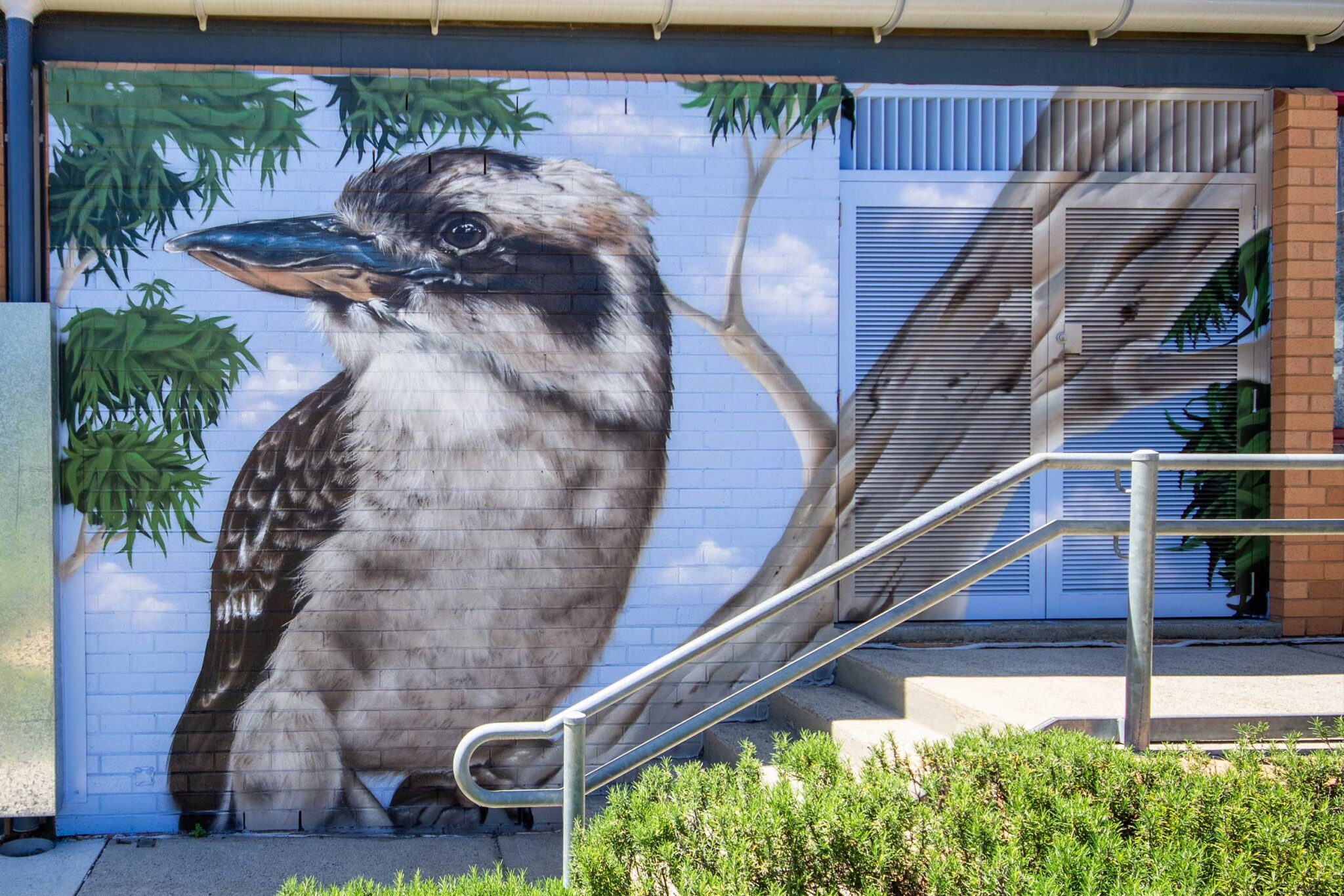
Kookaburra mural painted for a school in Sydney

Imagine walking into a school where students don’t just observe the environment, they’ve helped create it.

This is the impact of student involvement in school murals.

Rather than simply installing artwork, schools are increasingly choosing to collaborate with students to design and create murals that reflect their ideas, identity, and community.

This approach not only enhances the visual environment, but also contributes to the broader benefits of murals in educational settings.

While this article focuses on the process, student-led projects are also part of the broader benefits of school murals, which cover engagement, learning, and long-term impact.

Why Student Involvement Matters

When students are involved in mural creation, the outcome goes far beyond the artwork itself.

Key benefits include:

✔ Stronger engagement

Students feel connected to the space because they helped shape it.

Beyond participation, murals also contribute to improved learning environments, school culture, and student wellbeing.

Explore the full benefits of school murals

✔ Increased pride and ownership

Murals become something students respect and look after.

✔ More meaningful outcomes

The final artwork reflects real student voices, not just a concept applied to the space.

See how this is applied in
school mural projects

Moving From Decoration to Participation

High school students painting mural as part of graffiti art workshop

Traditional murals are created for students.

Student-led murals are created with students.

That shift changes everything.

Instead of:

  • A finished piece appearing overnight

You create:

  • A process students are part of
  • A shared experience
  • A stronger connection to the school environment

This is where student involvement in school murals delivers its biggest value.

How the Student-Led Mural Projects Works

This approach follows a structured process to ensure both creative input and professional execution.


1. Student Design Workshops

Students contribute ideas through:

  • Drawing sessions
  • Classroom brainstorming
  • Theme discussions

2. Refining Into a Professional Concept

Artists take student input and develop:

  • A cohesive composition
  • A visually strong design
  • A mural that still reflects student ideas

3. Hands-On Involvement

Depending on the project, students may:

  • Paint sections of the mural
  • Participate in workshops
  • Observe and engage during the process

Learn more about our mural process

Types of Student-Involved Murals

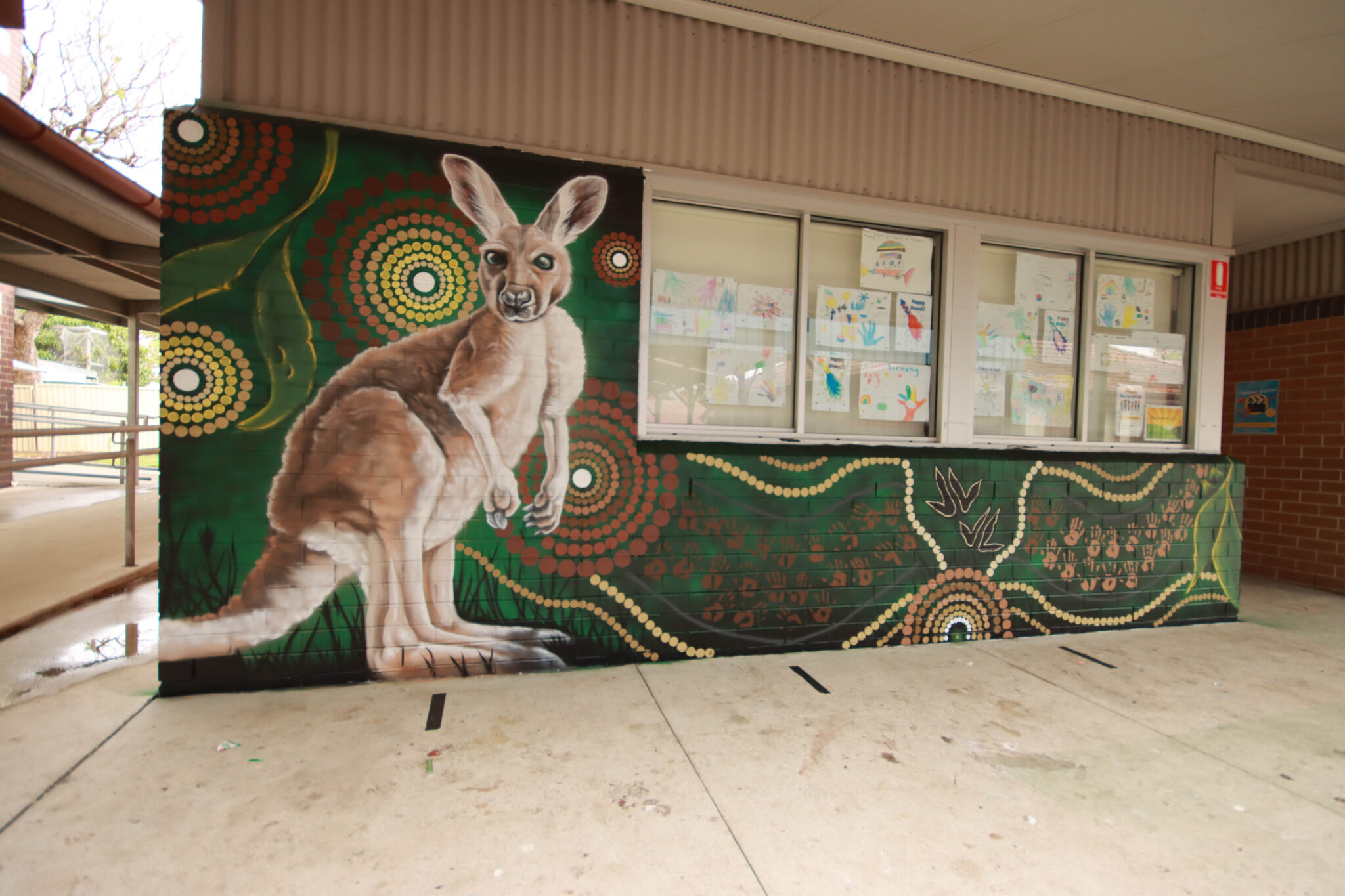
indigenous mural collaboration mural at a school

Student involvement works across a wide range of mural styles:

  • Subject-based murals (science, history, literacy)
  • Cultural and community murals
  • Environmental and sustainability themes
  • Inspirational and values-based designs

Each project is shaped by the students contributing to it.

Real Impact of Student Involvement

Schools that involve students in mural projects consistently see stronger outcomes.

Example – Student-Driven School Mural

In recent projects, involving students in the design phase resulted in:

  • Higher engagement during and after completion
  • Greater respect for the artwork
  • A stronger sense of identity within the space

Students weren’t just viewing the mural, they were connected to it.

Explore more examples:
School mural case studies

Why Schools Are Choosing This Approach

Schools are moving towards more interactive and engaging environments.

Student involvement in murals aligns with:

  • Engagement-focused education
  • Creative learning approaches
  • Building stronger school communities

It transforms murals from a visual upgrade into a meaningful experience.

Student-Led Murals in Sydney Schools

Across Sydney, schools are increasingly adopting student-led mural projects to create more engaging and personalised environments.

See how this is being applied locally:
Sydney mural projects

Projects can be adapted for primary, high school, and even community groups.

Not always, but involving students significantly increases the impact and long-term value of the mural.

This depends on the school — from workshops to hands-on painting.

Planning a Student-Led Mural Project?

If you’re looking to create a mural that truly reflects your students and school community, involving students in the process can deliver far greater impact.

Get a Quote Today

Or explore: