Managing Graffiti: Why Councils Commission Murals Instead

Sydney street artist public art mural

The audit question is simple: which walls has the council cleaned more than twice in the past year? That list is the mural shortlist.  

Ferguson Grounds Cricket Mural in Camden, NSW, depicting local cricket history and community spirit

Mural projects don’t always need to come from the graffiti removal budget. Many are funded through public art programs, community grants, placemaking initiatives, and partnerships with asset owners such as Sydney Water. We’ve written two guides to help:

For budgeting purposes, our mural costs and pricing guide covers what drives project pricing, and we provide itemised quotes within 24 hours.

Blackbook Ink has delivered public art and community mural projects for councils and government bodies including Camden Council, City of Ryde, Ku-ring-gai Council, Canterbury-Bankstown, Burwood Council and Sydney Water — with 670+ projects completed since 2011.

Council projects come with the delivery framework government clients need: WHS documentation, insurance, elevated work platform management, community consultation, and anti-graffiti protective coatings — end to end. Learn more about our community murals and public art services.


Frequently Asked Questions

Do murals actually reduce graffiti?

In our experience, yes — when done properly. Full-coverage murals by artists respected within the graffiti community, finished with anti-graffiti coatings, dramatically reduce tagging compared to blank walls. Our 100m+ Sydney Water mural has remained largely graffiti-free for over 10 years. See our detailed post on whether murals reduce graffiti.

Is a mural cheaper than ongoing graffiti removal?

For chronic-target walls, usually — over time. Removal is a recurring cost that never ends; a mural is a one-off investment with minimal maintenance, especially with a protective coating applied. Walls being cleaned multiple times per year typically reach payback fastest.

What happens if someone tags the mural?

With an anti-graffiti coating applied, isolated tags can be removed from the coated surface quickly without damaging the artwork. In practice, quality murals are tagged far less often than blank walls due to conventions of respect within graffiti culture.

Can the community be involved in the mural design?

Yes. We regularly run design workshops with schools, youth groups and community members — as we did with Camden High School students for the Camden Pump Station mural. Community involvement builds local ownership, which itself acts as a deterrent.

What council surfaces can be painted?

Pump stations, substations, amenity blocks, underpasses, retaining walls, sound barriers, community centres, sporting facilities and more — subject to access, surface condition and approvals. We handle site assessment as part of every quote.

How do councils fund mural projects?

Through graffiti management budgets, public art programs, placemaking funds, community grants and asset-owner partnerships. Our public art funding guide covers current options in detail.


Planning a graffiti management strategy that includes murals? Blackbook Ink works with councils across Australia to turn chronic graffiti targets into protected public artworks. Get a free quote — response within 24 hours.

[/vc_column_text][/vc_column][/vc_row]

More recently, our Camden Pump Station mural for Camden Council and Sydney Water applied the same thinking to a flood-exposed infrastructure site — combining site-specific design, student input from Camden High School, and protective coating suited to the environment.  

 anti graffiti mural sydney water sutherland

Removal spending is purely defensive. A mural budget delivers the graffiti outcome plus everything councils are separately funding elsewhere:

Placemaking. A mural turns grey infrastructure — pump stations, substations, underpasses, amenity blocks — into landmarks that residents photograph and identify with.

Community engagement. Mural projects can involve schools, youth groups and residents in the design process. Our Camden project ran a design workshop with a Year 10 Visual Design class, which built local ownership of the artwork — and walls the community feels ownership of are walls the community protects.

Perception of safety. Persistent tagging signals neglect and reduces perceived safety in public spaces. Quality public art signals care and activation — the reverse effect, on the same budget line.

A visible outcome to report. Removal spend is invisible when it works. A mural is a deliverable councillors can open, media can photograph and communities can point to.

The councils managing graffiti most cost-effectively aren’t choosing between removal and murals — they’re layering tools by site:

Rapid removal for isolated tags on low-risk surfaces, and same-day removal of offensive material anywhere.

Anti-graffiti coatings on high-value plain surfaces that need to stay plain.

Commissioned murals on chronic-target walls — the surfaces being cleaned three, four, five times a year. These are the sites where removal spend is highest and where a mural delivers the fastest payback.

Community engagement built into mural projects in youth-heavy areas, converting potential taggers into stakeholders.

The audit question is simple: which walls has the council cleaned more than twice in the past year? That list is the mural shortlist.  

Ferguson Grounds Cricket Mural in Camden, NSW, depicting local cricket history and community spirit

Mural projects don’t always need to come from the graffiti removal budget. Many are funded through public art programs, community grants, placemaking initiatives, and partnerships with asset owners such as Sydney Water. We’ve written two guides to help:

For budgeting purposes, our mural costs and pricing guide covers what drives project pricing, and we provide itemised quotes within 24 hours.

Blackbook Ink has delivered public art and community mural projects for councils and government bodies including Camden Council, City of Ryde, Ku-ring-gai Council, Canterbury-Bankstown, Burwood Council and Sydney Water — with 670+ projects completed since 2011.

Council projects come with the delivery framework government clients need: WHS documentation, insurance, elevated work platform management, community consultation, and anti-graffiti protective coatings — end to end. Learn more about our community murals and public art services.


Frequently Asked Questions

Do murals actually reduce graffiti?

In our experience, yes — when done properly. Full-coverage murals by artists respected within the graffiti community, finished with anti-graffiti coatings, dramatically reduce tagging compared to blank walls. Our 100m+ Sydney Water mural has remained largely graffiti-free for over 10 years. See our detailed post on whether murals reduce graffiti.

Is a mural cheaper than ongoing graffiti removal?

For chronic-target walls, usually — over time. Removal is a recurring cost that never ends; a mural is a one-off investment with minimal maintenance, especially with a protective coating applied. Walls being cleaned multiple times per year typically reach payback fastest.

What happens if someone tags the mural?

With an anti-graffiti coating applied, isolated tags can be removed from the coated surface quickly without damaging the artwork. In practice, quality murals are tagged far less often than blank walls due to conventions of respect within graffiti culture.

Can the community be involved in the mural design?

Yes. We regularly run design workshops with schools, youth groups and community members — as we did with Camden High School students for the Camden Pump Station mural. Community involvement builds local ownership, which itself acts as a deterrent.

What council surfaces can be painted?

Pump stations, substations, amenity blocks, underpasses, retaining walls, sound barriers, community centres, sporting facilities and more — subject to access, surface condition and approvals. We handle site assessment as part of every quote.

How do councils fund mural projects?

Through graffiti management budgets, public art programs, placemaking funds, community grants and asset-owner partnerships. Our public art funding guide covers current options in detail.


Planning a graffiti management strategy that includes murals? Blackbook Ink works with councils across Australia to turn chronic graffiti targets into protected public artworks. Get a free quote — response within 24 hours.

[/vc_column_text][/vc_column][/vc_row]

A mural painted by artists with genuine standing in the graffiti community is protected not just by coatings, but by culture. We’ve covered the evidence for this in detail in our post Do Murals Reduce Graffiti? What Actually Works.

3. Anti-graffiti coatings make any incident cheap to fix

Every Blackbook Ink public mural can be finished with an anti-graffiti protective coating. If an isolated tag does appear, it can be removed from the coated surface quickly and cheaply — without damaging the artwork underneath. Instead of a full repaint or abrasive clean, maintenance becomes a minor wipe-down.

The strongest evidence is a wall that used to be a problem and stopped being one.

Blackbook Ink delivered a 100-metre-plus graffiti art production for Sydney Water in Sutherland — a large, exposed infrastructure wall of exactly the kind that attracts constant tagging. Combined with our anti-graffiti coating approach, that mural has remained largely graffiti-free for more than 10 years.

Compare the economics. A wall of that scale on a removal-only strategy could easily absorb thousands of dollars in cleaning costs every year, indefinitely. As a mural, it became a one-off investment that has protected itself for a decade — while also becoming a local landmark rather than a maintenance line item.

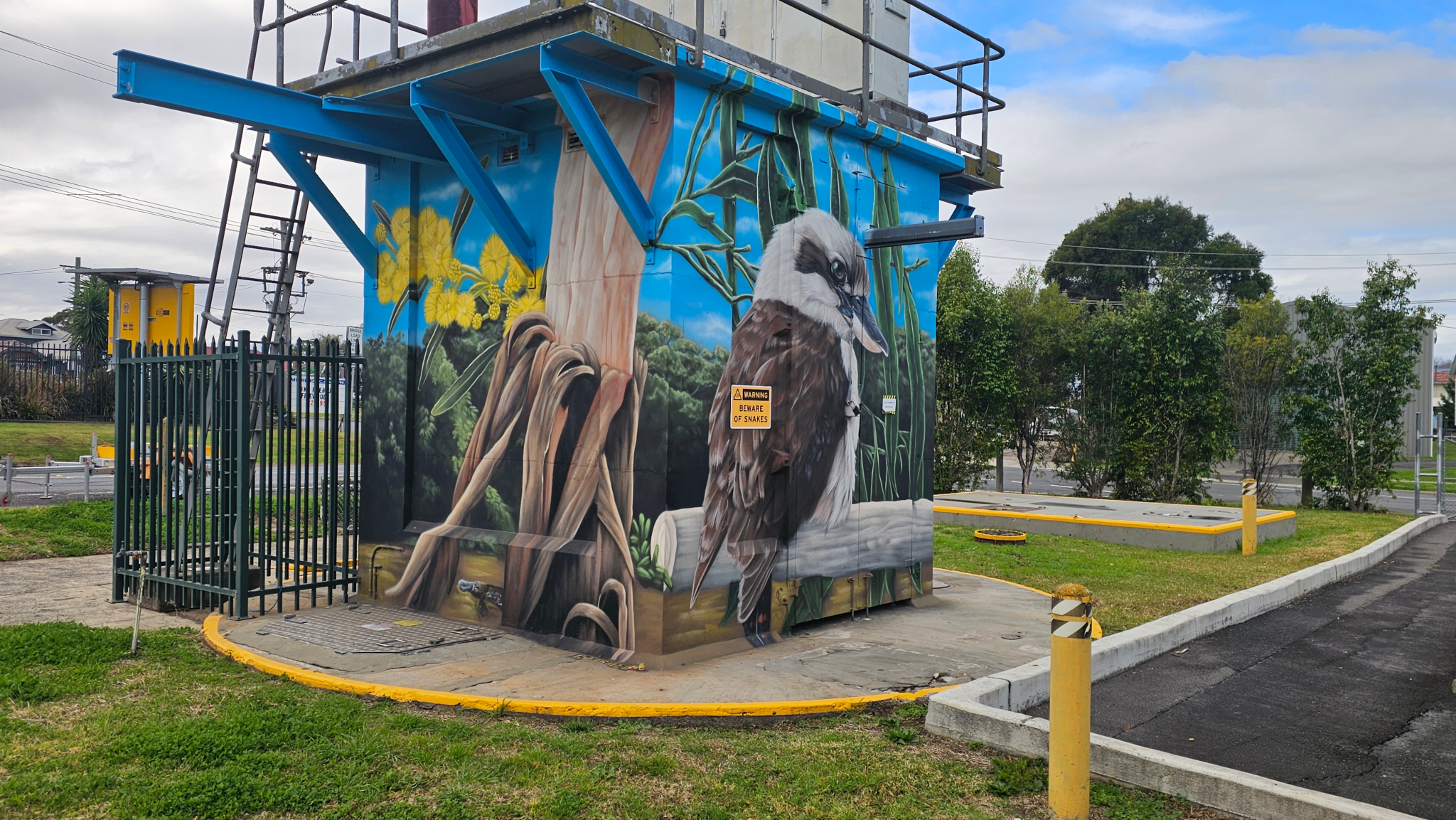
More recently, our Camden Pump Station mural for Camden Council and Sydney Water applied the same thinking to a flood-exposed infrastructure site — combining site-specific design, student input from Camden High School, and protective coating suited to the environment.  

 anti graffiti mural sydney water sutherland

Removal spending is purely defensive. A mural budget delivers the graffiti outcome plus everything councils are separately funding elsewhere:

Placemaking. A mural turns grey infrastructure — pump stations, substations, underpasses, amenity blocks — into landmarks that residents photograph and identify with.

Community engagement. Mural projects can involve schools, youth groups and residents in the design process. Our Camden project ran a design workshop with a Year 10 Visual Design class, which built local ownership of the artwork — and walls the community feels ownership of are walls the community protects.

Perception of safety. Persistent tagging signals neglect and reduces perceived safety in public spaces. Quality public art signals care and activation — the reverse effect, on the same budget line.

A visible outcome to report. Removal spend is invisible when it works. A mural is a deliverable councillors can open, media can photograph and communities can point to.

The councils managing graffiti most cost-effectively aren’t choosing between removal and murals — they’re layering tools by site:

Rapid removal for isolated tags on low-risk surfaces, and same-day removal of offensive material anywhere.

Anti-graffiti coatings on high-value plain surfaces that need to stay plain.

Commissioned murals on chronic-target walls — the surfaces being cleaned three, four, five times a year. These are the sites where removal spend is highest and where a mural delivers the fastest payback.

Community engagement built into mural projects in youth-heavy areas, converting potential taggers into stakeholders.

The audit question is simple: which walls has the council cleaned more than twice in the past year? That list is the mural shortlist.  

Ferguson Grounds Cricket Mural in Camden, NSW, depicting local cricket history and community spirit

Mural projects don’t always need to come from the graffiti removal budget. Many are funded through public art programs, community grants, placemaking initiatives, and partnerships with asset owners such as Sydney Water. We’ve written two guides to help:

For budgeting purposes, our mural costs and pricing guide covers what drives project pricing, and we provide itemised quotes within 24 hours.

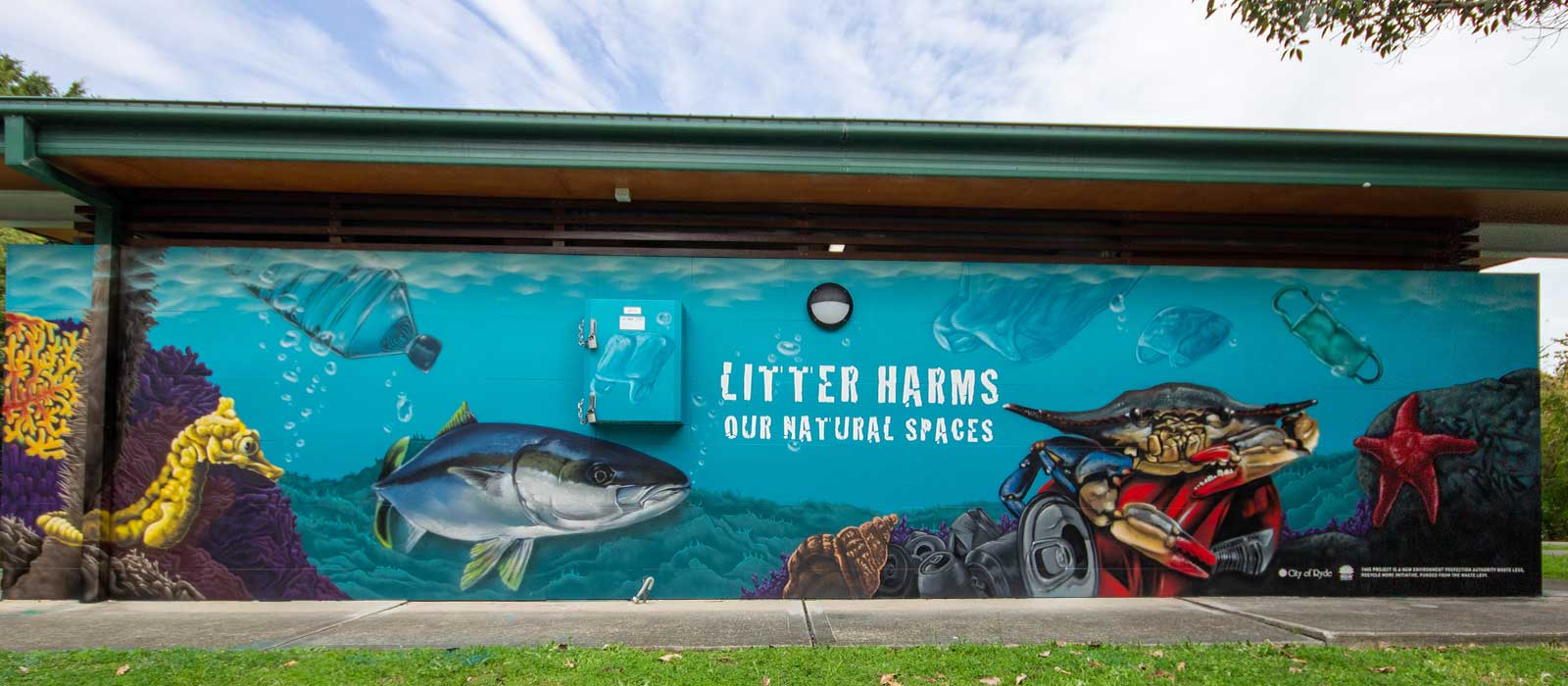
Blackbook Ink has delivered public art and community mural projects for councils and government bodies including Camden Council, City of Ryde, Ku-ring-gai Council, Canterbury-Bankstown, Burwood Council and Sydney Water — with 670+ projects completed since 2011.

Council projects come with the delivery framework government clients need: WHS documentation, insurance, elevated work platform management, community consultation, and anti-graffiti protective coatings — end to end. Learn more about our community murals and public art services.


Frequently Asked Questions

Do murals actually reduce graffiti?

In our experience, yes — when done properly. Full-coverage murals by artists respected within the graffiti community, finished with anti-graffiti coatings, dramatically reduce tagging compared to blank walls. Our 100m+ Sydney Water mural has remained largely graffiti-free for over 10 years. See our detailed post on whether murals reduce graffiti.

Is a mural cheaper than ongoing graffiti removal?

For chronic-target walls, usually — over time. Removal is a recurring cost that never ends; a mural is a one-off investment with minimal maintenance, especially with a protective coating applied. Walls being cleaned multiple times per year typically reach payback fastest.

What happens if someone tags the mural?

With an anti-graffiti coating applied, isolated tags can be removed from the coated surface quickly without damaging the artwork. In practice, quality murals are tagged far less often than blank walls due to conventions of respect within graffiti culture.

Can the community be involved in the mural design?

Yes. We regularly run design workshops with schools, youth groups and community members — as we did with Camden High School students for the Camden Pump Station mural. Community involvement builds local ownership, which itself acts as a deterrent.

What council surfaces can be painted?

Pump stations, substations, amenity blocks, underpasses, retaining walls, sound barriers, community centres, sporting facilities and more — subject to access, surface condition and approvals. We handle site assessment as part of every quote.

How do councils fund mural projects?

Through graffiti management budgets, public art programs, placemaking funds, community grants and asset-owner partnerships. Our public art funding guide covers current options in detail.


Planning a graffiti management strategy that includes murals? Blackbook Ink works with councils across Australia to turn chronic graffiti targets into protected public artworks. Get a free quote — response within 24 hours.

[/vc_column_text][/vc_column][/vc_row]

Taggers are drawn to blank, visible surfaces where their work will be seen. A wall covered in a professional, full-coverage mural offers no canvas. There’s nowhere for a tag to stand out, and tagging over finished artwork produces a far less visible result than tagging a clean wall.

2. Murals carry cultural weight within graffiti culture

This is the part most graffiti management guides miss, and it’s where Blackbook Ink’s background matters. Our artists come from the Australian graffiti community, with over 25 years of aerosol experience. Within that culture, there is a long-standing convention of respect for finished pieces. Particularly work by known, respected artists. Tagging over a quality mural is seen very differently to tagging a blank wall.

A mural painted by artists with genuine standing in the graffiti community is protected not just by coatings, but by culture. We’ve covered the evidence for this in detail in our post Do Murals Reduce Graffiti? What Actually Works.

3. Anti-graffiti coatings make any incident cheap to fix

Every Blackbook Ink public mural can be finished with an anti-graffiti protective coating. If an isolated tag does appear, it can be removed from the coated surface quickly and cheaply — without damaging the artwork underneath. Instead of a full repaint or abrasive clean, maintenance becomes a minor wipe-down.

The strongest evidence is a wall that used to be a problem and stopped being one.

Blackbook Ink delivered a 100-metre-plus graffiti art production for Sydney Water in Sutherland — a large, exposed infrastructure wall of exactly the kind that attracts constant tagging. Combined with our anti-graffiti coating approach, that mural has remained largely graffiti-free for more than 10 years.

Compare the economics. A wall of that scale on a removal-only strategy could easily absorb thousands of dollars in cleaning costs every year, indefinitely. As a mural, it became a one-off investment that has protected itself for a decade — while also becoming a local landmark rather than a maintenance line item.

More recently, our Camden Pump Station mural for Camden Council and Sydney Water applied the same thinking to a flood-exposed infrastructure site — combining site-specific design, student input from Camden High School, and protective coating suited to the environment.  

 anti graffiti mural sydney water sutherland

Removal spending is purely defensive. A mural budget delivers the graffiti outcome plus everything councils are separately funding elsewhere:

Placemaking. A mural turns grey infrastructure — pump stations, substations, underpasses, amenity blocks — into landmarks that residents photograph and identify with.

Community engagement. Mural projects can involve schools, youth groups and residents in the design process. Our Camden project ran a design workshop with a Year 10 Visual Design class, which built local ownership of the artwork — and walls the community feels ownership of are walls the community protects.

Perception of safety. Persistent tagging signals neglect and reduces perceived safety in public spaces. Quality public art signals care and activation — the reverse effect, on the same budget line.

A visible outcome to report. Removal spend is invisible when it works. A mural is a deliverable councillors can open, media can photograph and communities can point to.

The councils managing graffiti most cost-effectively aren’t choosing between removal and murals — they’re layering tools by site:

Rapid removal for isolated tags on low-risk surfaces, and same-day removal of offensive material anywhere.

Anti-graffiti coatings on high-value plain surfaces that need to stay plain.

Commissioned murals on chronic-target walls — the surfaces being cleaned three, four, five times a year. These are the sites where removal spend is highest and where a mural delivers the fastest payback.

Community engagement built into mural projects in youth-heavy areas, converting potential taggers into stakeholders.

The audit question is simple: which walls has the council cleaned more than twice in the past year? That list is the mural shortlist.  

Ferguson Grounds Cricket Mural in Camden, NSW, depicting local cricket history and community spirit

Mural projects don’t always need to come from the graffiti removal budget. Many are funded through public art programs, community grants, placemaking initiatives, and partnerships with asset owners such as Sydney Water. We’ve written two guides to help:

For budgeting purposes, our mural costs and pricing guide covers what drives project pricing, and we provide itemised quotes within 24 hours.

Blackbook Ink has delivered public art and community mural projects for councils and government bodies including Camden Council, City of Ryde, Ku-ring-gai Council, Canterbury-Bankstown, Burwood Council and Sydney Water — with 670+ projects completed since 2011.

Council projects come with the delivery framework government clients need: WHS documentation, insurance, elevated work platform management, community consultation, and anti-graffiti protective coatings — end to end. Learn more about our community murals and public art services.


Frequently Asked Questions

Do murals actually reduce graffiti?

In our experience, yes — when done properly. Full-coverage murals by artists respected within the graffiti community, finished with anti-graffiti coatings, dramatically reduce tagging compared to blank walls. Our 100m+ Sydney Water mural has remained largely graffiti-free for over 10 years. See our detailed post on whether murals reduce graffiti.

Is a mural cheaper than ongoing graffiti removal?

For chronic-target walls, usually — over time. Removal is a recurring cost that never ends; a mural is a one-off investment with minimal maintenance, especially with a protective coating applied. Walls being cleaned multiple times per year typically reach payback fastest.

What happens if someone tags the mural?

With an anti-graffiti coating applied, isolated tags can be removed from the coated surface quickly without damaging the artwork. In practice, quality murals are tagged far less often than blank walls due to conventions of respect within graffiti culture.

Can the community be involved in the mural design?

Yes. We regularly run design workshops with schools, youth groups and community members — as we did with Camden High School students for the Camden Pump Station mural. Community involvement builds local ownership, which itself acts as a deterrent.

What council surfaces can be painted?

Pump stations, substations, amenity blocks, underpasses, retaining walls, sound barriers, community centres, sporting facilities and more — subject to access, surface condition and approvals. We handle site assessment as part of every quote.

How do councils fund mural projects?

Through graffiti management budgets, public art programs, placemaking funds, community grants and asset-owner partnerships. Our public art funding guide covers current options in detail.


Planning a graffiti management strategy that includes murals? Blackbook Ink works with councils across Australia to turn chronic graffiti targets into protected public artworks. Get a free quote — response within 24 hours.

[/vc_column_text][/vc_column][/vc_row]

Commissioned murals interrupt the removal cycle in three ways.

1. Murals remove the canvas

Taggers are drawn to blank, visible surfaces where their work will be seen. A wall covered in a professional, full-coverage mural offers no canvas. There’s nowhere for a tag to stand out, and tagging over finished artwork produces a far less visible result than tagging a clean wall.

2. Murals carry cultural weight within graffiti culture

This is the part most graffiti management guides miss, and it’s where Blackbook Ink’s background matters. Our artists come from the Australian graffiti community, with over 25 years of aerosol experience. Within that culture, there is a long-standing convention of respect for finished pieces. Particularly work by known, respected artists. Tagging over a quality mural is seen very differently to tagging a blank wall.

A mural painted by artists with genuine standing in the graffiti community is protected not just by coatings, but by culture. We’ve covered the evidence for this in detail in our post Do Murals Reduce Graffiti? What Actually Works.

3. Anti-graffiti coatings make any incident cheap to fix

Every Blackbook Ink public mural can be finished with an anti-graffiti protective coating. If an isolated tag does appear, it can be removed from the coated surface quickly and cheaply — without damaging the artwork underneath. Instead of a full repaint or abrasive clean, maintenance becomes a minor wipe-down.

The strongest evidence is a wall that used to be a problem and stopped being one.

Blackbook Ink delivered a 100-metre-plus graffiti art production for Sydney Water in Sutherland — a large, exposed infrastructure wall of exactly the kind that attracts constant tagging. Combined with our anti-graffiti coating approach, that mural has remained largely graffiti-free for more than 10 years.

Compare the economics. A wall of that scale on a removal-only strategy could easily absorb thousands of dollars in cleaning costs every year, indefinitely. As a mural, it became a one-off investment that has protected itself for a decade — while also becoming a local landmark rather than a maintenance line item.

More recently, our Camden Pump Station mural for Camden Council and Sydney Water applied the same thinking to a flood-exposed infrastructure site — combining site-specific design, student input from Camden High School, and protective coating suited to the environment.  

 anti graffiti mural sydney water sutherland

Removal spending is purely defensive. A mural budget delivers the graffiti outcome plus everything councils are separately funding elsewhere:

Placemaking. A mural turns grey infrastructure — pump stations, substations, underpasses, amenity blocks — into landmarks that residents photograph and identify with.

Community engagement. Mural projects can involve schools, youth groups and residents in the design process. Our Camden project ran a design workshop with a Year 10 Visual Design class, which built local ownership of the artwork — and walls the community feels ownership of are walls the community protects.

Perception of safety. Persistent tagging signals neglect and reduces perceived safety in public spaces. Quality public art signals care and activation — the reverse effect, on the same budget line.

A visible outcome to report. Removal spend is invisible when it works. A mural is a deliverable councillors can open, media can photograph and communities can point to.

The councils managing graffiti most cost-effectively aren’t choosing between removal and murals — they’re layering tools by site:

Rapid removal for isolated tags on low-risk surfaces, and same-day removal of offensive material anywhere.

Anti-graffiti coatings on high-value plain surfaces that need to stay plain.

Commissioned murals on chronic-target walls — the surfaces being cleaned three, four, five times a year. These are the sites where removal spend is highest and where a mural delivers the fastest payback.

Community engagement built into mural projects in youth-heavy areas, converting potential taggers into stakeholders.

The audit question is simple: which walls has the council cleaned more than twice in the past year? That list is the mural shortlist.  

Ferguson Grounds Cricket Mural in Camden, NSW, depicting local cricket history and community spirit

Mural projects don’t always need to come from the graffiti removal budget. Many are funded through public art programs, community grants, placemaking initiatives, and partnerships with asset owners such as Sydney Water. We’ve written two guides to help:

For budgeting purposes, our mural costs and pricing guide covers what drives project pricing, and we provide itemised quotes within 24 hours.

Blackbook Ink has delivered public art and community mural projects for councils and government bodies including Camden Council, City of Ryde, Ku-ring-gai Council, Canterbury-Bankstown, Burwood Council and Sydney Water — with 670+ projects completed since 2011.

Council projects come with the delivery framework government clients need: WHS documentation, insurance, elevated work platform management, community consultation, and anti-graffiti protective coatings — end to end. Learn more about our community murals and public art services.


Frequently Asked Questions

Do murals actually reduce graffiti?

In our experience, yes — when done properly. Full-coverage murals by artists respected within the graffiti community, finished with anti-graffiti coatings, dramatically reduce tagging compared to blank walls. Our 100m+ Sydney Water mural has remained largely graffiti-free for over 10 years. See our detailed post on whether murals reduce graffiti.

Is a mural cheaper than ongoing graffiti removal?

For chronic-target walls, usually — over time. Removal is a recurring cost that never ends; a mural is a one-off investment with minimal maintenance, especially with a protective coating applied. Walls being cleaned multiple times per year typically reach payback fastest.

What happens if someone tags the mural?

With an anti-graffiti coating applied, isolated tags can be removed from the coated surface quickly without damaging the artwork. In practice, quality murals are tagged far less often than blank walls due to conventions of respect within graffiti culture.

Can the community be involved in the mural design?

Yes. We regularly run design workshops with schools, youth groups and community members — as we did with Camden High School students for the Camden Pump Station mural. Community involvement builds local ownership, which itself acts as a deterrent.

What council surfaces can be painted?

Pump stations, substations, amenity blocks, underpasses, retaining walls, sound barriers, community centres, sporting facilities and more — subject to access, surface condition and approvals. We handle site assessment as part of every quote.

How do councils fund mural projects?

Through graffiti management budgets, public art programs, placemaking funds, community grants and asset-owner partnerships. Our public art funding guide covers current options in detail.


Planning a graffiti management strategy that includes murals? Blackbook Ink works with councils across Australia to turn chronic graffiti targets into protected public artworks. Get a free quote — response within 24 hours.

[/vc_column_text][/vc_column][/vc_row]

Every council in Australia has a graffiti problem, and most are managing it the same way: report, remove, repeat. A wall gets tagged, a contractor is called, the tag is cleaned or painted over, and within weeks sometimes days the fresh blank surface is tagged again.

Graffiti removal is estimated to cost the Australian community more than $2 billion every year, with removal rates typically running between $50 and $100 per square metre. Individual councils routinely spend tens of thousands to hundreds of thousands of dollars annually on removal alone, and larger cities spend far more. That money buys a clean wall temporarily and nothing else.

Increasingly, councils across NSW, Victoria, Queensland and WA are taking a different approach to managing graffiti: commissioning murals. This article explains why the removal-only cycle fails, why murals work as a long-term graffiti deterrent, and how councils can build murals into a graffiti management strategy that actually reduces spend over time.  

dwarf tree frog detail on pump station mural

Rapid removal has a place in any graffiti strategy. Offensive material should come down same-day, and quick removal of tags can discourage repeat attacks in areas without an established graffiti culture.

But as a standalone strategy, removal has a fundamental flaw: it restores the exact conditions that attracted graffiti in the first place. A large, blank, publicly visible wall is a canvas. Cleaning it doesn’t change what it is — it just resets it.

This creates the removal cycle most council asset managers know well:

    1. Wall gets tagged
    2. Council pays for removal
    3. Blank wall returns
    4. Wall gets tagged again
    5. Repeat — indefinitely

Each cycle costs money, and the spend never converts into an asset. A wall that costs $2,000 to clean four times a year is an $8,000 annual liability with nothing to show for it. Over five years, that’s $40,000 spent maintaining a blank wall.


Commissioned murals interrupt the removal cycle in three ways.

1. Murals remove the canvas

Taggers are drawn to blank, visible surfaces where their work will be seen. A wall covered in a professional, full-coverage mural offers no canvas. There’s nowhere for a tag to stand out, and tagging over finished artwork produces a far less visible result than tagging a clean wall.

2. Murals carry cultural weight within graffiti culture

This is the part most graffiti management guides miss, and it’s where Blackbook Ink’s background matters. Our artists come from the Australian graffiti community, with over 25 years of aerosol experience. Within that culture, there is a long-standing convention of respect for finished pieces. Particularly work by known, respected artists. Tagging over a quality mural is seen very differently to tagging a blank wall.

A mural painted by artists with genuine standing in the graffiti community is protected not just by coatings, but by culture. We’ve covered the evidence for this in detail in our post Do Murals Reduce Graffiti? What Actually Works.

3. Anti-graffiti coatings make any incident cheap to fix

Every Blackbook Ink public mural can be finished with an anti-graffiti protective coating. If an isolated tag does appear, it can be removed from the coated surface quickly and cheaply — without damaging the artwork underneath. Instead of a full repaint or abrasive clean, maintenance becomes a minor wipe-down.

The strongest evidence is a wall that used to be a problem and stopped being one.

Blackbook Ink delivered a 100-metre-plus graffiti art production for Sydney Water in Sutherland — a large, exposed infrastructure wall of exactly the kind that attracts constant tagging. Combined with our anti-graffiti coating approach, that mural has remained largely graffiti-free for more than 10 years.

Compare the economics. A wall of that scale on a removal-only strategy could easily absorb thousands of dollars in cleaning costs every year, indefinitely. As a mural, it became a one-off investment that has protected itself for a decade — while also becoming a local landmark rather than a maintenance line item.

More recently, our Camden Pump Station mural for Camden Council and Sydney Water applied the same thinking to a flood-exposed infrastructure site — combining site-specific design, student input from Camden High School, and protective coating suited to the environment.  

 anti graffiti mural sydney water sutherland

Removal spending is purely defensive. A mural budget delivers the graffiti outcome plus everything councils are separately funding elsewhere:

Placemaking. A mural turns grey infrastructure — pump stations, substations, underpasses, amenity blocks — into landmarks that residents photograph and identify with.

Community engagement. Mural projects can involve schools, youth groups and residents in the design process. Our Camden project ran a design workshop with a Year 10 Visual Design class, which built local ownership of the artwork — and walls the community feels ownership of are walls the community protects.

Perception of safety. Persistent tagging signals neglect and reduces perceived safety in public spaces. Quality public art signals care and activation — the reverse effect, on the same budget line.

A visible outcome to report. Removal spend is invisible when it works. A mural is a deliverable councillors can open, media can photograph and communities can point to.

The councils managing graffiti most cost-effectively aren’t choosing between removal and murals — they’re layering tools by site:

Rapid removal for isolated tags on low-risk surfaces, and same-day removal of offensive material anywhere.

Anti-graffiti coatings on high-value plain surfaces that need to stay plain.

Commissioned murals on chronic-target walls — the surfaces being cleaned three, four, five times a year. These are the sites where removal spend is highest and where a mural delivers the fastest payback.

Community engagement built into mural projects in youth-heavy areas, converting potential taggers into stakeholders.

The audit question is simple: which walls has the council cleaned more than twice in the past year? That list is the mural shortlist.  

Ferguson Grounds Cricket Mural in Camden, NSW, depicting local cricket history and community spirit

Mural projects don’t always need to come from the graffiti removal budget. Many are funded through public art programs, community grants, placemaking initiatives, and partnerships with asset owners such as Sydney Water. We’ve written two guides to help:

For budgeting purposes, our mural costs and pricing guide covers what drives project pricing, and we provide itemised quotes within 24 hours.

Blackbook Ink has delivered public art and community mural projects for councils and government bodies including Camden Council, City of Ryde, Ku-ring-gai Council, Canterbury-Bankstown, Burwood Council and Sydney Water — with 670+ projects completed since 2011.

Council projects come with the delivery framework government clients need: WHS documentation, insurance, elevated work platform management, community consultation, and anti-graffiti protective coatings — end to end. Learn more about our community murals and public art services.


Frequently Asked Questions

Do murals actually reduce graffiti?

In our experience, yes — when done properly. Full-coverage murals by artists respected within the graffiti community, finished with anti-graffiti coatings, dramatically reduce tagging compared to blank walls. Our 100m+ Sydney Water mural has remained largely graffiti-free for over 10 years. See our detailed post on whether murals reduce graffiti.

Is a mural cheaper than ongoing graffiti removal?

For chronic-target walls, usually — over time. Removal is a recurring cost that never ends; a mural is a one-off investment with minimal maintenance, especially with a protective coating applied. Walls being cleaned multiple times per year typically reach payback fastest.

What happens if someone tags the mural?

With an anti-graffiti coating applied, isolated tags can be removed from the coated surface quickly without damaging the artwork. In practice, quality murals are tagged far less often than blank walls due to conventions of respect within graffiti culture.

Can the community be involved in the mural design?

Yes. We regularly run design workshops with schools, youth groups and community members — as we did with Camden High School students for the Camden Pump Station mural. Community involvement builds local ownership, which itself acts as a deterrent.

What council surfaces can be painted?

Pump stations, substations, amenity blocks, underpasses, retaining walls, sound barriers, community centres, sporting facilities and more — subject to access, surface condition and approvals. We handle site assessment as part of every quote.

How do councils fund mural projects?

Through graffiti management budgets, public art programs, placemaking funds, community grants and asset-owner partnerships. Our public art funding guide covers current options in detail.


Planning a graffiti management strategy that includes murals? Blackbook Ink works with councils across Australia to turn chronic graffiti targets into protected public artworks. Get a free quote — response within 24 hours.