Learning how to paint a mural can feel overwhelming at first, especially if you are working on a large wall, using new materials or trying to scale up a design from paper to a full mural.
The good news is that mural painting becomes much easier when you break the process into clear steps.
Whether you are painting a small feature wall at home, a community mural, a school project or your first outdoor wall, the same basic process applies: plan the design, prepare the surface, scale the artwork, paint in stages and protect the finished mural.
This beginner’s guide explains how to paint a mural step by step, including what materials you may need, how to transfer your design onto a wall and what to think about before you start painting.
At Blackbook Ink, we have painted hundreds of murals across Australia for schools, councils, businesses, homes and public spaces. This guide is designed to help beginners understand the basics before starting their own mural project.
What Is a Mural?
A mural is an artwork painted or applied directly onto a wall, ceiling or large surface.
Murals can be created indoors or outdoors and can range from simple shapes and patterns through to detailed illustrations, realistic portraits, landscapes, graffiti art or large-scale public artworks.
Unlike a canvas painting, a mural needs to work with the wall itself. The size, surface, location, lighting and viewing distance all affect how the artwork should be designed and painted.
This is why planning is one of the most important parts of mural painting.
What Do You Need to Paint a Mural?
Before you start painting, it helps to organise your materials.
What you need will depend on the size of the mural, the surface and whether it is indoors or outdoors, but most beginner mural projects will need a version of the following:
- Painter’s tape
- Drop sheets
- Pencils, chalk or paint markers
- A tape measure
- A level or ruler
- Primer or undercoat
- Exterior or interior wall paint
- Acrylic paint or spray paint
- Paint brushes
- Rollers and trays
- Water buckets or cleaning materials
- Rags or paper towel
- Ladder or step platform
- Clear protective coating if needed
For larger murals, you may also need scaffolding, an elevated work platform, spray equipment, respirators, safety barriers or traffic control depending on the location.
For beginner projects, start small. A simple feature wall, bedroom mural or low-height garden wall is much easier to manage than a large outdoor commercial wall.
Step 1: Choose the Right Wall
The first step in learning how to paint a mural is choosing the right wall.
A good mural wall should be stable, clean, dry and suitable for painting. Avoid surfaces with major cracking, peeling paint, water damage, mould or loose render unless they can be repaired first.
Before starting, check:
- Is the wall indoor or outdoor?
- Is the surface smooth, brick, concrete, render, timber or metal?
- Is there existing paint on the wall?
- Is the wall exposed to direct sunlight or rain?
- Can you safely reach the full area?
- Do you have permission to paint it?
The surface will affect what preparation, primer and paint system you need.
Step 2: Plan Your Mural Design
A successful mural starts with a clear design.
Before painting directly on the wall, sketch your idea on paper or create a digital mockup. This helps you work out the composition, colours, proportions and main elements before committing paint to the surface.
For beginners, simple designs are usually best. Large shapes, bold colours and clear outlines are easier to paint than highly detailed realism.
When planning your mural, think about:
- What is the purpose of the mural?
- Who will see it?
- How far away will people stand when viewing it?
- What colours suit the space?
- How detailed does it need to be?
- Will it include text, logos or characters?
- Does the design suit the size and shape of the wall?
A design that looks good on paper may need to be simplified when scaled up to a large wall.
Step 3: Prepare the Wall
Wall preparation is one of the most important parts of mural painting.
Even the best artwork will struggle to last if the surface is dirty, dusty, damp or flaking. Preparation helps the paint bond properly and creates a cleaner surface to work on.
Basic wall preparation may include:
- Cleaning dust, dirt or cobwebs from the wall
- Removing loose or peeling paint
- Filling small holes or cracks
- Sanding rough edges
- Washing greasy or dirty areas
- Allowing the wall to dry completely
- Applying primer or undercoat if needed
Outdoor walls often need more preparation than indoor walls because they are exposed to weather, moisture and dirt.
If you are painting a wall with mould, damp problems or major structural issues, fix those problems before starting the mural.
Step 4: Prime or Base Coat the Wall
A primer or base coat helps create an even surface and can make your mural colours look cleaner.
If the wall is bare brick, concrete, render, timber or an uneven colour, a primer or base coat is usually recommended. For outdoor murals, use products suitable for exterior surfaces.
A base coat can also help cover old marks, patchy paint or strong colours underneath.
For most murals, a light neutral base colour works well because it gives you a clean surface to sketch and paint on. White, off-white or light grey are common options, depending on the final design.
Allow the base coat to dry properly before transferring your design.
Step 5: Transfer Your Design Onto the Wall
Once the wall is prepared, the next step is getting your design onto the surface.
There are several ways to do this:
Grid Method
The grid method is a simple option for beginners.
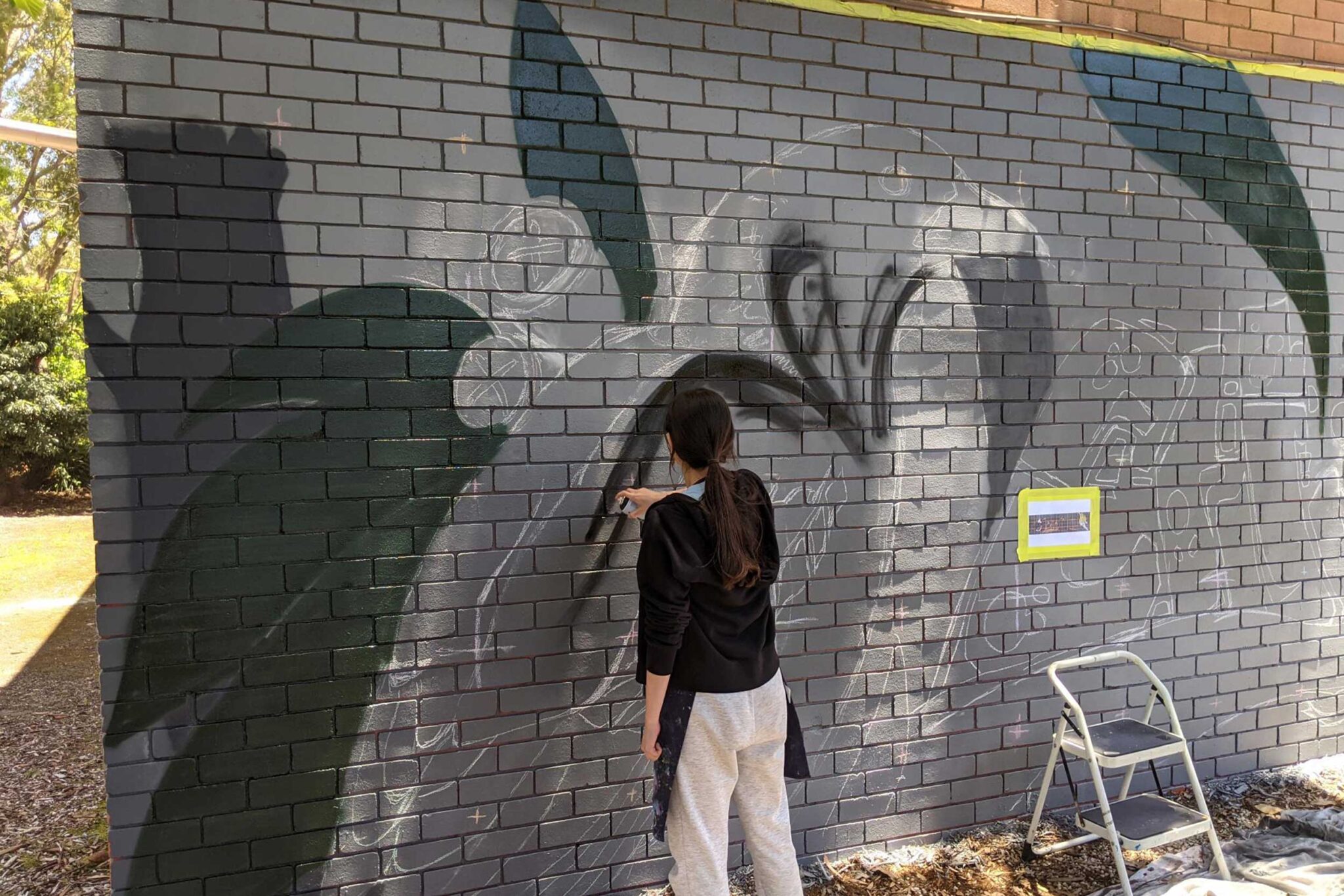
Draw a grid over your design, then draw a matching larger grid on the wall. Copy each square one at a time. This helps keep proportions accurate when scaling up.
Projector Method
A projector can be used to project your design onto the wall so you can trace the outlines.
This is useful for indoor murals or night-time work, but it may not be practical in bright outdoor conditions.
VR Headset Method
Another option is to use a VR headset, such as a Meta Quest 3, with mural layout apps like Contour or Stencil VR.
This method can help you view your design over the wall and trace the layout at scale. Instead of relying only on a projector, a VR headset can allow you to see your artwork positioned in the space while you mark out the main shapes, proportions and outlines.
For mural painting, this can be useful when:
You are working in a space where a projector is hard to position
The wall is too large for a standard projector setup
You want to check scale and placement before painting
You need to transfer outlines, lettering or composition guides
You want a more flexible way to place artwork onto the wall
VR can be a helpful tool, but it is still only a guide. You still need to check measurements, step back from the wall regularly and make adjustments by eye. Lighting, headset alignment and wall shape can affect how accurate the overlay appears.
For beginners, it is best to use VR to map out the main structure first, then refine the sketch manually before painting.
Freehand Sketching
If you are confident with drawing, you can sketch directly onto the wall using chalk, pencil or diluted paint.
This gives more freedom but requires stronger drawing skills.
Stencils or Tape
For simple shapes, patterns, lettering or geometric murals, stencils and painter’s tape can help create clean edges.
Choose the transfer method that suits your confidence level and the type of mural you are painting.
Step 6: Paint the Background First
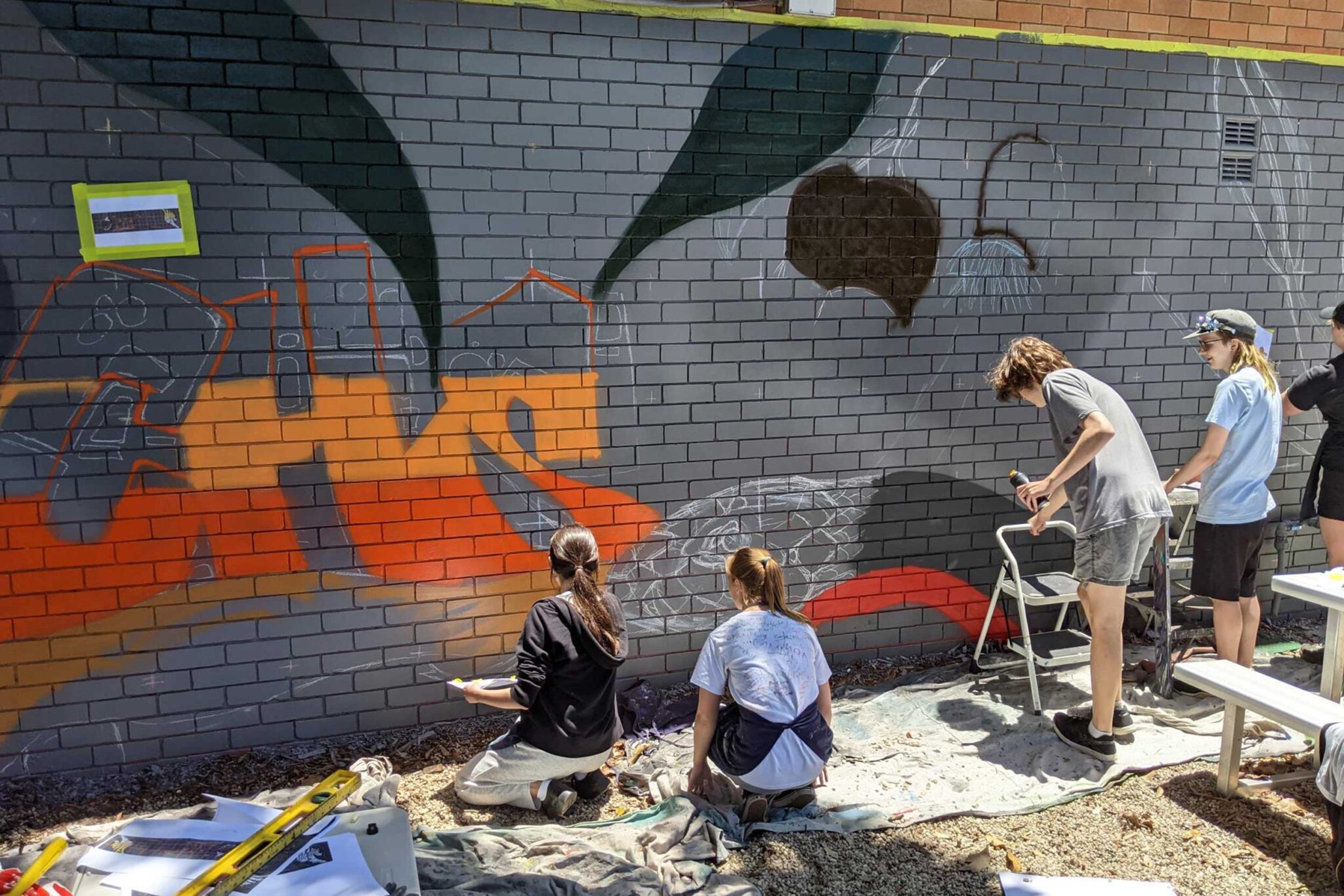
When painting a mural, it usually helps to work from the background forward.
Start with large background areas, then gradually build up midground shapes, main subjects, details and final highlights.
This process helps you avoid painting small details too early and then accidentally covering them later.
For example, if you are painting a landscape mural, you might paint:
- Sky or background colours
- Distant shapes
- Main objects
- Shadows
- Highlights
- Fine details
- Outlines or finishing touches
Working in layers keeps the process more organised and helps the mural develop naturally.
Step 7: Build Up Colours in Layers
Mural painting usually looks better when colour is built up in layers rather than trying to finish everything in one coat.
Some colours may need two or more coats to look solid, especially bright colours, yellows, reds or paints going over a darker base.
Let each layer dry before adding the next. This helps avoid muddy colours, streaks or uneven coverage.
For beginners, it is often easier to block in the main shapes first, then refine the mural gradually.
Do not worry if the mural looks rough during the early stages. Most murals go through an unfinished-looking stage before the details bring everything together.
Step 8: Add Details, Shadows and Highlights
Once the main colours and shapes are in place, you can begin adding details.
This might include outlines, textures, shadows, highlights, patterns, lettering or small features that make the mural feel finished.
Details should support the mural rather than overcrowd it. On large walls, too much small detail can get lost from a distance.
A good rule for beginners is to step back regularly and look at the mural from the normal viewing distance. This helps you see whether the artwork is balanced and readable.
Step 9: Let the Mural Dry Properly
After the mural is finished, allow it to dry properly before touching, cleaning or sealing it.
Drying time will depend on the paint type, weather, wall surface and how thickly the paint has been applied.
Outdoor murals may take longer to fully cure, especially in cooler or humid conditions.
Avoid painting in rain, extreme heat, heavy wind or on damp surfaces. Poor weather conditions can affect how the paint bonds and dries.
Step 10: Seal or Protect the Mural
Not every mural needs a clear coating, but outdoor murals, high-touch areas and public-facing walls often benefit from extra protection.
A protective coating can help defend the mural against UV exposure, weathering, dirt and graffiti.
For outdoor commercial or public murals, anti-graffiti coatings may be worth considering. These coatings can make future cleaning easier if the wall is tagged or marked.
Before applying any clear coat, make sure it is compatible with the paint you used. Some coatings can change the finish or colour of the artwork if applied incorrectly.
Common Beginner Mural Painting Mistakes
Beginner mural painters often run into the same problems.
Here are some common mistakes to avoid:
- Starting without a clear design
- Painting on a dirty or damaged wall
- Skipping primer or base coat when needed
- Using the wrong paint for the surface
- Adding too much detail too early
- Not stepping back to check the overall mural
- Painting in poor weather conditions
- Forgetting about access and safety
- Not allowing enough drying time
- Using a coating that is not compatible with the paint
Most of these problems can be avoided with proper planning and surface preparation.
Indoor vs Outdoor Murals
Indoor and outdoor murals have different requirements.
Indoor murals usually have more controlled conditions. You do not have to worry as much about rain, UV exposure or weather damage, but you still need to think about ventilation, floor protection and the type of wall paint being used.
Outdoor murals need to handle sunlight, moisture, temperature changes, dirt and public exposure. They usually require more careful surface preparation, exterior-grade materials and sometimes protective coatings.
If you are painting your first mural, an indoor wall is often easier to manage.
How Long Does It Take to Paint a Mural?
The time it takes to paint a mural depends on the size, detail level, surface condition and number of people painting.
A small simple mural might take a day or two. A larger detailed mural could take several days or weeks.
You also need to allow time for design, wall preparation, base coating, drying time and final protection.
For professional mural projects, the artwork itself is only one part of the process. Planning, concept development, site access, materials, safety and weather can all affect the timeline.
What Paint Should You Use for a Mural?
The best paint for a mural depends on the surface and location.
For indoor murals, quality acrylic paints, interior wall paints or low-odour water-based paints can work well.
For outdoor murals, choose exterior-grade paints designed to handle weather and UV exposure. Spray paint can also be used for murals, especially for graffiti art, street art and large-scale colour work.
Do not use cheap craft paint for large outdoor murals. It may fade, peel or break down faster than proper mural-grade materials.
When in doubt, choose paint designed for the surface you are painting.
Do You Need Permission to Paint a Mural?
Yes, in most cases you need permission before painting a mural on any wall you do not own.
For private walls, get permission from the property owner.
For public spaces, schools, businesses, strata buildings, council property or commercial sites, you may need formal approval before painting.
You may also need to consider:
Building ownership
Council rules
Strata approval
Public liability insurance
Working at heights
Copyright for reference images
Safety requirements
Access equipment
Neighbouring properties
Never paint a mural on public or private property without permission.
It is also worth understanding copyright rules for public art and reference images before using photos, logos or characters you did not create yourself.
When Should You Hire a Professional Mural Artist?
Painting your own mural can be a great creative project, especially for small indoor walls or simple designs.
But for larger, detailed, public-facing or commercial murals, hiring a professional mural artist is usually the better option.
A professional mural artist can help with design, scale, surface preparation, materials, safety, access and long-term durability.
This is especially important for:
Business murals
School murals
Public art murals
Council projects
Large exterior walls
Brand activations
Detailed realism
Murals requiring lifts or scaffolding
Walls needing anti-graffiti coatings
If the mural needs to represent a business, school or public space professionally, it is worth getting the artwork planned and painted properly.
Final Thoughts
Learning how to paint a mural is all about planning, preparation and patience.
Start with a clear design, choose the right wall, prepare the surface properly and build the artwork in stages. A mural does not need to be highly detailed to be effective. Simple shapes, strong colours and a well-planned design can still create a powerful result.
For beginners, start small and build confidence before attempting large or complex walls.
If you are planning a mural for a school, business, home or public space and want a professional result, Blackbook Ink can help with concept design, mural painting, graffiti art, street art and large-scale wall artwork across Sydney and Australia.
FAQs About Painting a Mural
How do you paint a mural for beginners?
Start by choosing a suitable wall, creating a simple design, preparing the surface, applying a base coat, transferring your design and painting the mural in layers. Beginners should start with large shapes and simple colours before adding smaller details.
What paint do you use for a wall mural?
For indoor murals, acrylic paint or quality interior wall paint can work well. For outdoor murals, use exterior-grade paint or professional spray paint designed for outdoor conditions. The best paint depends on the surface, location and finish you want.
Do you need to prime a wall before painting a mural?
In many cases, yes. Primer helps paint bond to the surface and creates a more even base. Bare brick, concrete, render, timber or patchy walls usually benefit from primer or a base coat before mural painting.
Can you paint a mural without a projector?
Yes. You can use the grid method, doodle grid, VR Headset, freehand sketching, stencils, painter’s tape or chalk outlines to transfer your design onto the wall without a projector.
How long does it take to paint a mural?
A small simple mural may take a day or two, while larger or more detailed murals can take several days or longer. Design time, surface preparation, drying time, access and weather can all affect the timeline.
Should you seal a mural?
Outdoor murals, public-facing walls and high-touch areas often benefit from a protective clear coat or anti-graffiti coating. Indoor murals may not need sealing unless they are in a high-use area.